


Atomionics has outlined plans to extend its quantum gravimetry technology into the marine environment, positioning the capability as a new mode of underwater intelligence that can map through water, across the seabed, and into the ground beneath. The initiative is supported by Enterprise Singapore and Cap Vista, the strategic investment arm and wholly owned subsidiary of the Defence Science and Technology Agency (DSTA).
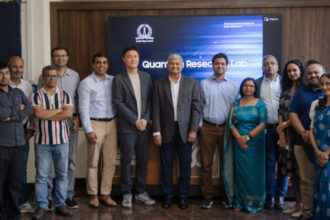
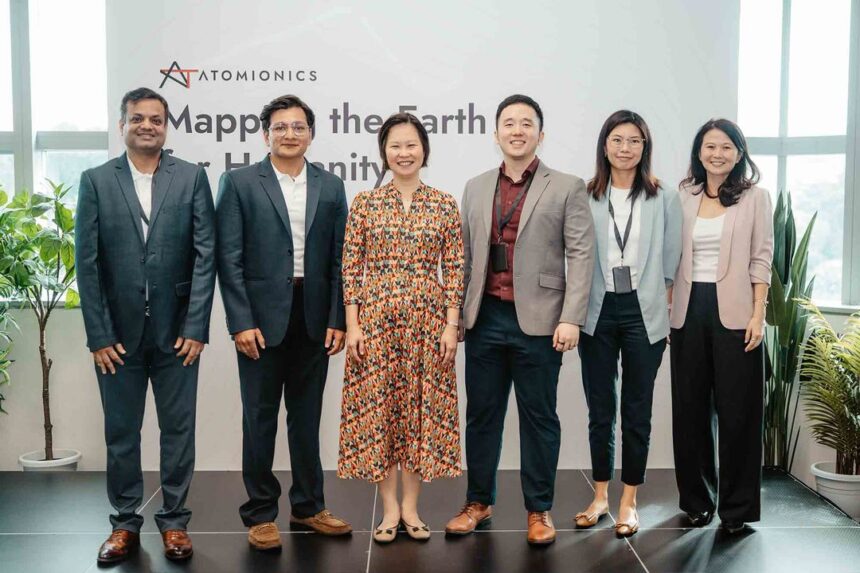
The announcement was made at the opening of Atomionics’ new headquarters at Alexandra Technopark, officiated by Ms Gan Siow Huang, Minister of State for Trade and Industry.

Although global interest in the ocean is high, much of the seafloor remains unmapped at high resolution. More of the surface of Mars has been charted in detail than Earth’s oceans, largely because tools capable of seeing through water and sediment at scale have not existed. As a result, the seabed, its underlying geology, the infrastructure resting on it, and the movement of mass through the water column have remained largely obscured.
Quantum gravimetry offers a different approach. Every mass leaves a signature in the gravitational field—whether on the seabed, beneath it, or moving through the water above. Atomionics’ instrument, GRAVIO, reads those signatures to reconstruct the underwater environment in three dimensions without physical contact, emitted signals, or detectable activity. Applied to the ocean, the technology opens a domain that has not previously been mapped in this way.
“To see beneath the water is to hold an advantage that spans defence, energy, and infrastructure,” said Dr. Ravi Kumar, Co-founder and CTO of Atomionics. “We are building the ability to secure the cables that carry the world’s data, find the resources beneath the seabed, and know the seafloor before we build on it.”

Singapore’s strategic interests make the underwater domain particularly significant. Its position as the world’s second-busiest container port, the concentration of undersea cables landing on its shores, and the reliance of its harbours and channels on precise situational awareness all underscore the importance of understanding what lies beneath the surface. A domain that can be mapped and re‑read at will can be secured, monitored for interference with critical infrastructure, and kept navigable as demands increase. Atomionics’ work aims to build this capability domestically, in Singapore’s own waters.
Singapore is among the early adopters of quantum sensing outside the laboratory. Cap Vista’s investment in Atomionics aligns with its strategy to support deep‑tech companies with potential dual‑use applications in defence and security.
“Cap Vista invests where commercial technology and strategic capability converge, and quantum sensing sits squarely at that intersection,” said Eunice Ooi, CEO, Cap Vista. “We are proud to support Atomionics in both their tech and business roadmaps, especially in opening up possibilities in the new marine domain.”
Atomionics maintains an ongoing partnership with the Future Systems and Technology Directorate (FSTD), MINDEF Singapore, and Cap Vista to advance its quantum technology for dual‑use applications. Building on this foundation, the parties are exploring further collaborations to introduce quantum gravimetry to the ocean.
GRAVIO is already deployed commercially across Asia, Australia, Europe, and the United States. The instrument has been tested in one of the most challenging environments for sensitive equipment: an active mine, subject to blasting, heavy vehicle movement, and continuous industrial vibration. In that setting, GRAVIO produced a 3D model of the subsurface that matched drill‑hole ground truth to better than 95% without additional drilling. Atomionics positions this performance as evidence that the instrument can withstand the motion and conditions of marine deployment. The company notes that the underwater domain holds significant value, including critical minerals, energy reserves, and carbon storage beneath the seabed—resources that cannot be accessed without first being located.
The broader ambition behind the technology is to build a continuously updated, three‑dimensional map of the Earth’s subsurface—on land and at sea—rather than relying on models refreshed only once per generation. Extending operations into the ocean marks a key step toward that goal.
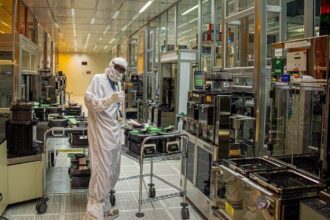
To support this work and future generations of instruments, Atomionics has opened Asia’s first integrated quantum sensing hub at Alexandra Technopark. The 5,700+ sq ft facility houses the full lifecycle of a quantum instrument, including laboratories for physics, mechanical assembly, and electronics, as well as the AI platform that converts raw gravity measurements into subsurface maps. In the physics lab, visitors can observe the measurement process: inside GRAVIO, a cloud of atoms is released into freefall and interrogated by pulses of laser light, enabling the instrument to read the Earth’s gravitational pull. Along the corridor, the Quantum Experience Gallery displays successive generations of sensors, illustrating the evolution of the technology.
“Atomionics’ achievements demonstrate the growing strength of Singapore’s quantum ecosystem and the conducive environment that enables frontier research to be translated into globally relevant deep-tech innovations. Enterprise Singapore is proud to support companies like Atomionics as they scale breakthrough technologies from Singapore to international markets, reinforcing our position as a growing hub for deep-tech innovation and commercialisation.” said Emily Liew, Assistant Managing Director, Enterprise Singapore.