


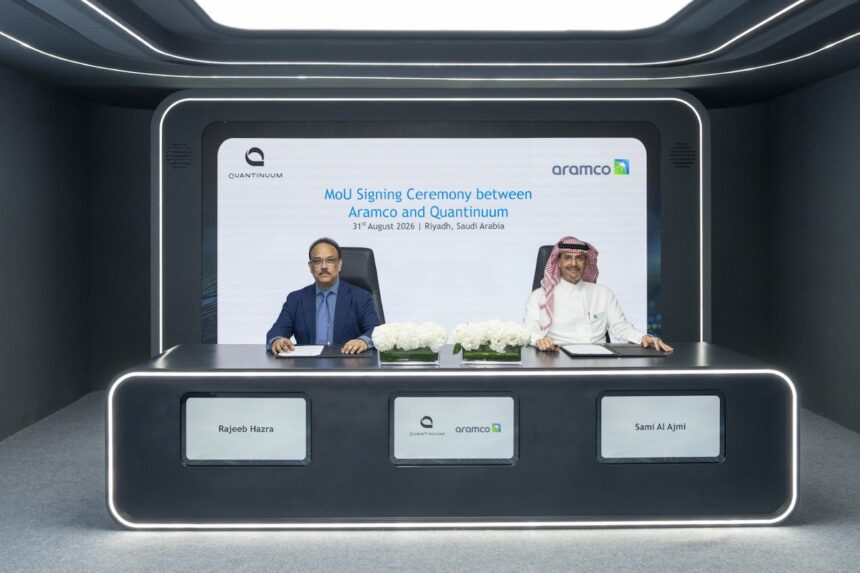
Quantinuum and Aramco have agreed to explore a series of industrial use cases, enhance quantum computing capabilities, and prepare for a potential research collaboration focused on fault-tolerant quantum computing.
Under a non-binding memorandum of understanding that they signed, the companies intend to undertake preliminary technical onboarding and engage in knowledge exchange activities.

They will also identify Aramco’s challenges that may be suitable for quantum computing research with an emphasis on solving complex problems in energy and digital transformation.
The collaboration aims to assess how future generations of quantum systems may address relevant scientific and industrial challenges, and to benchmark different quantum computing modalities.
Also, the team up complements Aramco’s existing initiatives in the application of advanced quantum technologies within the energy industry, and reinforces its efforts towards supporting the digital transformation of the sector and contributing to the evolving quantum computing roadmap for the energy industry.

“Organizations that expect to benefit from quantum computing need to begin developing their expertise, algorithms and workflows today,” said Rajeeb Hazra, president and CEO of Quantinuum.
“This MOU creates a framework for Quantinuum and Aramco to exchange expertise, identify important industrial challenges and prepare for a deeper research collaboration,” said Hazra.
“By combining Aramco’s scientific and engineering knowledge with Quantinuum’s integrated hardware and software capabilities, we aim to build a strong foundation for research across future generations of quantum computing,” he added.