


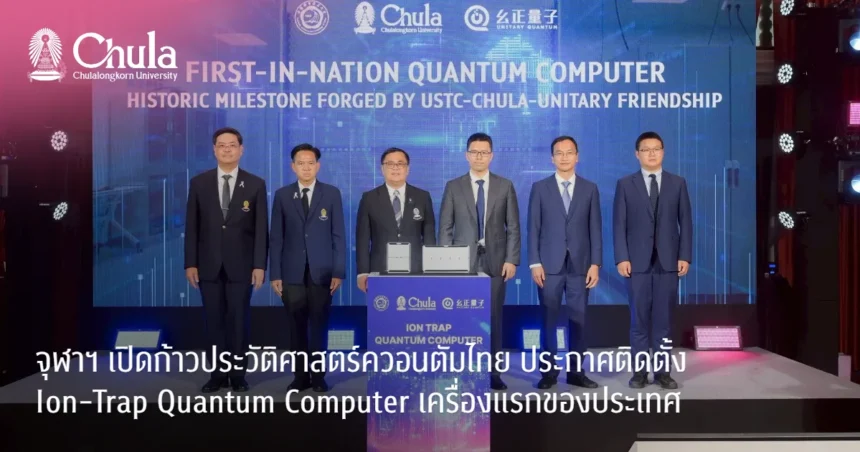
Chulalongkorn University has announced a major advancement for Thailand in quantum technology under the concept “First-in-Nation Quantum Engine and Program: Beyond AI into the Quantum Future.”
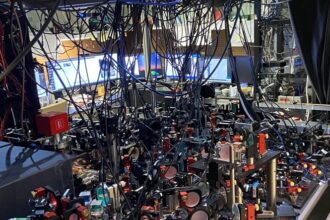
The initiative marks the first installation of a quantum computer and the establishment of a quantum technology academic program in Thailand. It includes the deployment of Southeast Asia’s first trapped-ion quantum computer and the launch of a Master of Science program in Quantum Technology aimed at developing human resources for the country’s emerging quantum era.

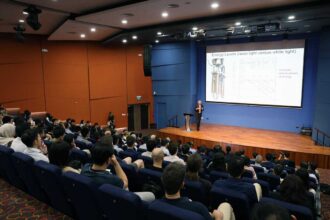
The launch event took place on July 14, 2026, at the Maha Chulalongkorn Building. Professor Dr. Vilelert Poorivachara, President of Chulalongkorn University, presided over the opening ceremony. Professor Dr. Pranart Bodhiyaraj, Dean of the Faculty of Science, spoke about the development of a quantum ecosystem. Professor Jin-Shi Xu of the University of Science and Technology of China (USTC) discussed quantum computing and ongoing research collaboration with Chulalongkorn University. Associate Professor Dr. Thiti Bowornratanarak, Dean of the College of Integrated Studies, announced the launch of the new Master’s program in Quantum Technology.
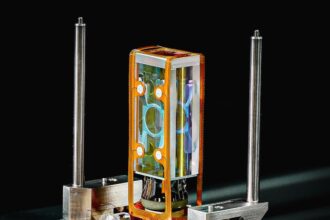
During the “Chula Quantum Leap” launch ceremony, the university also announced a collaboration with USTC and Hefei Unitary Quantum Technology Co., Ltd. to install an ion-trap quantum computer as core infrastructure for quantum education, research, and development in Thailand. Dr. Ran He of Hefei Unitary Quantum Technology presented an overview of quantum computing technology, including its operating principles, capabilities, and applications, followed by the official announcement of the installation.
The quantum computing system will serve as a platform for research in quantum computing, quantum algorithm development, innovation in quantum information, and the training of human resources in quantum technology. It is also intended to promote collaboration among universities, industry, and international partners, helping translate research into practical applications. The installation strengthens Thailand’s scientific and technological infrastructure and reflects Chulalongkorn University’s commitment to positioning the country as a leading quantum technology hub in Southeast Asia, according to the University’s media release.

Alongside the installation, the university launched the Master of Science program in Quantum Technology, operated by the College of Interdisciplinary Studies. The interdisciplinary curriculum integrates physics, mathematics, computer engineering, computer science, artificial intelligence, business, and finance. The program aims to produce graduates capable of applying quantum technologies in industry, finance, communications, security, and the digital economy.
The program is open to graduates from diverse academic backgrounds. Students will share core subjects and may specialize in areas aligned with their interests. They will also participate in integrated research projects with researchers, experts, and industry partners to connect academic learning with real-world problem-solving and innovation. The goal is to cultivate interdisciplinary professionals prepared for the future quantum technology job market.
The event concluded with a panel discussion titled “Educating the Workforce for Quantum Futures of Thailand,” marking the official launch of the Master’s program. Experts from universities, research institutes, and industry exchanged views on quantum technology trends, workforce development strategies, university–industry collaboration, and Thailand’s readiness for the future quantum economy.
Panelists included:
- Assoc. Prof. Dr. Sochipong Chatraphorn, Head of the Physics Department, Faculty of Science;
- Prof. Dr. Prapas Chongsatitwatana, Department of Computer Engineering, Faculty of Engineering;
- Prof. Jin-Shi Xu of USTC;
- Dr. Ran He of Hefei Unitary Quantum Technology;
- Dr. Yue Jun Jiang, Research and Development Management Advisor of Charoen Pokphand Group, Chief Research and Development Officer of True Corporation Public Company Limited, and Chief Technology Officer of All Now Group;
- Mr. Kanoksak Rachapat, Account Technical Leader and Senior Data Security Technical Sales, IBM Thailand; and
- Dr. Tutanun Sindhuprasit, Head of Research and Development, SCBX Public Company Limited.
The session was moderated by Assoc. Prof. Dr. Surachet Limkamnerd of the Faculty of Science. The discussion emphasized that building a quantum technology ecosystem requires simultaneous development of infrastructure, research, education, and industry collaboration. Investment in human resource development was highlighted as essential for achieving tangible outcomes in quantum technology adoption. Experts noted that physicists, mathematicians, engineers, computer scientists, business professionals, and specialists from multiple fields must work together to translate laboratory research into practical applications across economic and social sectors.
Professor Dr. Vilelert Poorivachara stated that the installation of a quantum computer and the launch of Thailand’s first quantum technology program mark a new chapter for both the university and the nation’s science and technology sector. He emphasized that the university’s role extends beyond teaching and curriculum development to leveraging knowledge, technology, and innovation for societal benefit and national advancement. In a rapidly changing world, he noted, quantum technology represents a step beyond the limitations of artificial intelligence and serves as a critical tool for creating new opportunities in economic, scientific, and industrial domains.
He added that the achievement results from collaboration among the Faculty of Science, Faculty of Engineering, College of Interdisciplinary Studies, and related organizations, together with USTC, Hefei Unitary Quantum Technology, and industry partners. This synergy will support the development of quantum infrastructure and the Master’s program, producing a new generation of personnel capable of translating research into practical applications and contributing to Thailand’s readiness for the quantum economy.
Associate Professor Dr. Thiti Bowornratanarak highlighted the role of the College of Interdisciplinary Studies in overseeing and developing curricula that integrate knowledge across fields. The goal is to produce highly skilled personnel capable of addressing emerging challenges and meeting future labor market needs. He noted that while acquiring advanced quantum computers is an important national milestone, sustainable development of a quantum ecosystem depends on cultivating human resources capable of effectively using and advancing the technology.
He explained that the Master’s program is designed to produce interdisciplinary professionals with expertise in both quantum computing and artificial intelligence. The curriculum emphasizes theoretical foundations and practical applications of quantum technologies across sectors such as pharmaceuticals, advanced materials, energy, medicine, finance, and transportation. It also promotes collaboration between institutions and industry to ensure that knowledge is connected to real-world needs. The ultimate aim is to develop leaders and a workforce capable of driving Thai industry and the innovation-based economy in line with global developments.
Professor Dr. Pranart Pothiyaraj stated that Chulalongkorn University aims to build a complete quantum ecosystem in Thailand by developing hardware, software, and human resources simultaneously. The university seeks to elevate national scientific and technological capabilities through collaboration among academia, government, and the private sector.
By 2027, Thailand’s first ion-trap quantum computer will be installed at the Faculty of Science through cooperation between Chulalongkorn University, USTC, and Hefei Unitary Quantum Technology under the Joint Quantum Science and Technology Laboratory. He described the installation as a crucial first step in building infrastructure, promoting research, developing industry, and producing quantum personnel to support Thailand’s long-term stability and sustainability.
Professor Jin-Shi Xu of USTC stated that the installation of Thailand’s first quantum computer at Chulalongkorn University marks a significant milestone in scientific and technological cooperation between Thailand and China. The initiative builds on a memorandum of understanding and the establishment of a joint quantum science and technology laboratory between USTC and Chulalongkorn University, as well as ongoing academic exchanges.
The collaboration with USTC and Hefei Unitary Quantum Technology brings advanced quantum technology to Thailand and establishes a foundation for joint research, student and faculty exchanges, and long-term development of quantum personnel. He noted that the aim is to create opportunities for Thai and Chinese researchers to work together, advance knowledge, and cultivate a new generation of quantum scientists and engineers.