


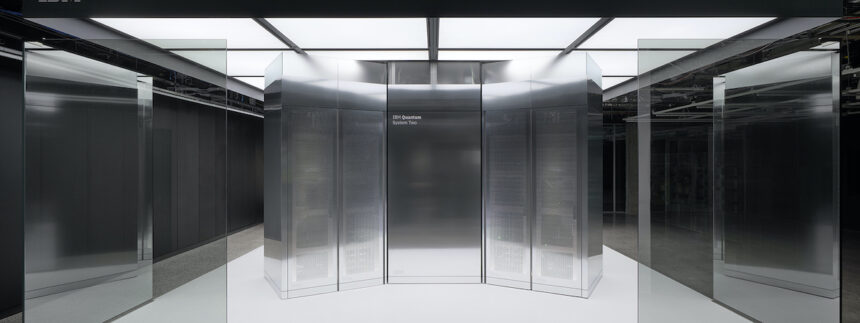
IBM and three of its major research partners — the University of Chicago, Qedma Quantum Computing, and Algorithmiq — today announced a series of landmark demonstrations that claim to collectively establish quantum advantage across multiple scientific domains. These results are stated to show quantum computers performing computations beyond the reach of leading classical simulation methods while simultaneously providing trust in the accuracy of those results.
- IBM and the University of Chicago demonstrate quantum advantage on logical circuits
- IBM and Qedma demonstrate quantum advantage in modeling quantum materials beyond classical capabilities
- IBM and Algorithmiq demonstrate quantum advantage with a framework for trusted quantum computation beyond classical verification
IBM and the University of Chicago demonstrate quantum advantage on logical circuits
IBM and researchers from the University of Chicago announced a demonstration achieving the fundamental criteria for quantum advantage: performing computations beyond the reach of leading classical simulation methods while providing trust that the computation returned accurate results.

In their paper, “Sampling hard circuits with verifiably high fidelity,” the researchers showed that these two goals could be simultaneously achieved by a novel construction of encoded quantum circuits, enabling one of the largest demonstrations of logical quantum computing to date. These circuits and their results are now openly released on the Quantum Advantage Tracker.
For years, researchers have used random circuit sampling (RCS) to test whether quantum computers could outperform classical systems. The challenge has been verification: as the problem becomes harder, it becomes increasingly difficult — and eventually infeasible — to prove the quantum computer’s answer is correct without making strong assumptions about the inner workings of the quantum computer.
In this experiment, IBM and University of Chicago researchers addressed this obstacle with a structured alternative to RCS. The team proved that this alternative retains the same hardness criteria as RCS, but crucially the new structure can be used to detect errors during the computation.

“Verification remains one of the biggest challenges in firmly establishing experimental quantum advantage,” said Bill Fefferman, Associate Professor at the University of Chicago. “This experiment develops techniques to better characterize the fidelity of hard quantum states under noise, increasing confidence that the quantum computer is solving a computationally hard problem.”
Soumik Ghosh, PhD student in Fefferman’s group, added: “Beyond strengthening experimental validation, advances in verification have the potential to unlock practical applications for the next generation of quantum computers.”
In one of the world’s largest-known error correction demonstrations, the team executed 70 logical qubits, shielding them from errors to run 2,415 logical two-qubit operations and 468 logical T gates. Because the circuit was encoded, the logical computation achieved effective logical error rates 10 times lower than the physical error rates, enabling remarkably high circuit fidelity even at large gate counts.
“We are now firmly in the quantum advantage era,” said Jay Gambetta, Director of IBM Research and IBM Fellow. “We have demonstrated a quantum computation beyond the practical reach of classical computers that establishes, with statistical confidence, a lower bound on how faithfully it was executed. This milestone gives scientists, developers, and businesses a new foundation for trusting quantum computers as they scale to problems far beyond what we can achieve classically.”
The IBM quantum computer completed the task in approximately 15 minutes, while many leading classical simulation approaches faced prohibitive runtimes. This milestone marks a significant step toward scalable, trusted quantum computing.
IBM and Qedma demonstrate quantum advantage in modeling quantum materials beyond classical capabilities
Qedma Quantum Computing and IBM announced a breakthrough study demonstrating how trusted, error‑mitigated quantum computation can explore the physics of materials beyond the capabilities of state‑of‑the‑art classical simulations — including those run on one of the world’s most powerful supercomputers.
By combining Qedma’s advanced error mitigation software, QESEM, with IBM quantum computers, researchers observed complex and long‑lived quantum dynamics in systems of up to 74 qubits, reaching a regime where multiple classical approaches failed to provide consistent, reliable answers.
The collaboration investigated the subtle, oscillatory dynamics of a two‑dimensional Floquet Ising model, a system used to study how a material’s magnetic properties evolve when rhythmically driven by external pulses. Understanding whether such oscillations persist in larger systems has remained an open challenge because the relevant regimes rapidly overwhelm classical computational methods.
To evaluate the significance of the quantum results, the team worked with RIKEN and BlueQubit to compare against state‑of‑the‑art classical simulation approaches. As the system grew in complexity, none of the classical approaches could consistently agree — even when run on Fugaku, one of the world’s most powerful supercomputers. By contrast, the error‑mitigated quantum results remained consistent and revealed clear, long‑time oscillatory behavior.
“IBM quantum computers have reached a maturity where they can produce solutions that, for the first time, achieve both trust in the solution through extensive testing and outperform the best classical simulation methods. I look forward to seeing future results benchmarked through the Quantum Advantage Tracker as we deepen our understanding of the boundary between quantum and classical computation,” said Jay Gambetta, Director of IBM Research and IBM Fellow. “By combining IBM’s quantum computers with Qedma’s advanced error reduction technology, we are transforming quantum computing into a practical tool to expand the frontier of knowledge.”
“For decades, quantum computing has promised discoveries beyond the reach of classical computers. Today, we’re beginning to see that promise become reality,” said Dr. Asif Sinay, CEO and co-founder of Qedma. “By leveraging Qedma’s software to make today’s quantum computers significantly more powerful and reliable, we’re helping move the quantum computing industry closer to real-world, commercial impact.”
“Quantum computers are beginning to open new possibilities for scientific discovery within the high-performance computing environment,” said Dr. Mitsuhisa Sato, Division Director of the Quantum-HPC Hybrid Platform Division, RIKEN Center for Computational Science. “This work leveraged RIKEN’s leadership in advanced classical simulation and supercomputing, alongside Qedma’s error mitigation software on IBM quantum computers, to demonstrate the ability of quantum computing to surpass the capabilities of leading classical methods. It is an important step towards a future where quantum and classical computing work together to advance science.”
Qedma’s QESEM software, available in the Qiskit Functions Catalog, provides guaranteed accuracy in extracting reliable results from noisy quantum hardware and is already used by leading enterprises and research institutions worldwide.
IBM and Algorithmiq demonstrate quantum advantage with a framework for trusted quantum computation beyond classical verification
Algorithmiq and IBM announced a major milestone: a joint demonstration of quantum advantage with the simulation of a heterogeneous quantum material, achieved with a new framework that establishes trust in quantum computations when classical verification is unavailable.
Eight months after the problem and results were first released on the Quantum Advantage Tracker, no classical method has been able to reliably produce results across the full problem regime studied. The work shows that quantum computers can provide trusted solutions more efficiently, more cheaply, or more accurately than leading classical methods.
The model, developed by senior scientist Sergey Filippov and Algorithmiq’s R&D division led by co‑founder and CSO Guillermo García‑Pérez, captured a programmable quantum material whose microscopic couplings could be tuned and reconfigured at will.
Classical simulation researchers attempted multiple approaches, but the various classical methods produced conflicting predictions. In the absence of an exact solution, the challenge was not only to outperform classical computation, but also to determine which result could be trusted.
To address this, the team developed a new framework for trusted quantum computation, including noise manipulation, controlled noise injection, modified gate calibrations, and execution across multiple IBM Quantum processors. The quantum results remained stable, providing evidence that the quantum computers were producing consistent solutions. With extensively tested noise models, they demonstrated a path to stand‑alone validation using unbiased error mitigation techniques with quantified uncertainty.
Algorithmiq is also releasing monoprop, its best classical method for simulating molecular ground states, enabling any research group to stress‑test future quantum advantage claims.
Supporting commentary included:
““For an exponential technology like quantum computing, a verified, openly contested instance of advantage is the inflection point: proof the curve is real, not projected. Demonstrating quantum advantage is an ongoing process, not a single moment, but we believe these results represent our strongest claim published to date and will come to be seen as a major milestone in the evolution of quantum computing,” said Sabrina Maniscalco, co‑founder and CEO of Algorithmiq.
“This collaboration with IBM has realized an idea first proposed by Richard Feynman in 1982. By simulating quantum matter using a digital quantum processor built from the same physics, we’re able to give researchers a tunable, physically interesting model open to anyone who wants to try to disprove it classically. It is a demanding test case, and it has withstood open challenge for eight months and counting,” said Matteo Rossi, co‑founder and CTO.
“Quantum computers have reached the point at which they can show evidence of the fundamental criteria for advantage: they can outperform leading classical methods, and they can simultaneously produce results that we can trust. I look forward to continued benchmarking of these results by the community on the Quantum Advantage Tracker, and progress towards rigorous error bars for quantum methods.This is a pivotal milestone in the future of quantum computers as we look towards scaling well beyond what could ever be possible with classical computers alone — and further explore new realms of physics, materials, life sciences, and much more,” said Jay Gambetta. “This is a pivotal milestone as we look towards scaling well beyond what classical computers could ever achieve.”