




Quantinuum, which is building trapped-ion quantum computers, announced it has signed a multi-year strategic partnership with Oracle to bring quantum computing to Oracle Cloud Infrastructure (OCI). Under the partnership, OCI customers will be able to directly access Quantinuum’s 98-qubit quantum computer Helios, alongside OCI’s high-performance computing (HPC) and GPU infrastructure, as part of an upcoming OCI quantum service.
Together, Quantinuum and Oracle plan to explore how hybrid quantum-AI infrastructure could address some of the most computationally intensive challenges facing enterprises and broaden access for universities and research institutions advancing scientific discovery and education. Many complex problems across materials discovery, drug development, logistics, energy, and financial modeling already push the limits of today’s computing architectures.

“We believe the next phase of enterprise computing will be shaped by bringing quantum, AI, and high-performance computing together,” said Dr. Rajeeb Hazra, President and CEO of Quantinuum. “Deploying Helios inside OCI gives Quantinuum and Oracle an opportunity to create a unique deeply integrated environment for hybrid workloads, explore enterprise use cases with customers, and accelerate commercial adoption.”
“AI has changed what organizations can imagine, and we believe quantum computing can expand what they’re able to solve,” said Mahesh Thiagarajan, Executive Vice President of Oracle Cloud Infrastructure. “By bringing Quantinuum’s Helios to Oracle Cloud Infrastructure, we want to give developers a practical and secure way to explore how quantum computing could complement their existing AI and HPC workloads on Oracle Cloud Infrastructure while improving compute efficiency and energy use.”
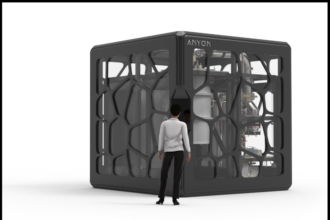
Helios, launched commercially in November 2025, is Quantinuum’s third-generation quantum computer. According to the company, the 98-physical-qubit trapped-ion system has been used in demonstrations involving 48 logical qubits and achieves an average two-qubit gate fidelity of 99.921%, exceeding the widely cited “three 9s” threshold. Helios, says Quantinuum, is designed for hybrid integration with classical HPC and AI environments.

By operating on-premises within OCI’s infrastructure, Helios will be integrated with existing OCI compute, networking, storage, identity, and data services under the same governance and access controls customers already use. Oracle plans to preview its OCI quantum service in the coming months, giving developers a streamlined way to move from simulation to execution on real quantum computing hardware. The planned OCI quantum service is expected to combine Quantinuum’s development stack with support for open-source hybrid-programming frameworks, helping developers build, test, and refine quantum-classical applications more efficiently.
“Our roadmap includes exploring classical-quantum hybrid computing to accelerate scientific discovery,” said Johannes Blaschke, Head of Scientific Computing, GBI at Ellison Institute of Technology. “QPUs promise to unlock new insights as they are very different from the hardware that we are used to. So having both GPUs and QPUs available within OCI would provide an all-in-one platform, simplify the operation of novel hardware, and help us move at speed from concept to execution by allowing our researchers to focus on innovation. It could herald in an exciting new phase for our work.”
“As quantum computing moves closer to enterprise adoption, simplifying how organizations access and integrate quantum resources has become just as important as advancing the hardware itself,” said Heather West, PhD, Global Quantum Research Lead at IDC. “Deploying quantum systems within private cloud environments enables organizations to integrate quantum computing into existing AI and HPC workflows through familiar cloud infrastructure and development tools, reducing barriers to adoption and making hybrid quantum-classical computing a practical part of enterprise IT.”