

QNu Labs is a Bengaluru-headquartered quantum cybersecurity startup, with offerings across Quantum Key Distribution (QKD), Post-Quantum Cryptography (PQC), and Quantum Random Number Generation (QRNG). Founded in 2016, the company now has a presence in the US and Australia, in addition to India. Earlier this year, QNu made headlines in India for demonstrating QKD across a 1000 km network, as part of India’s National Quantum Mission.
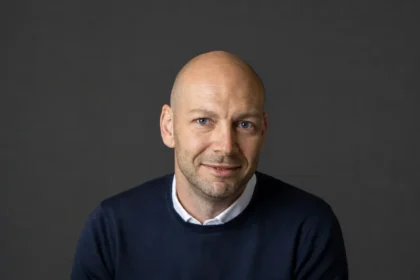
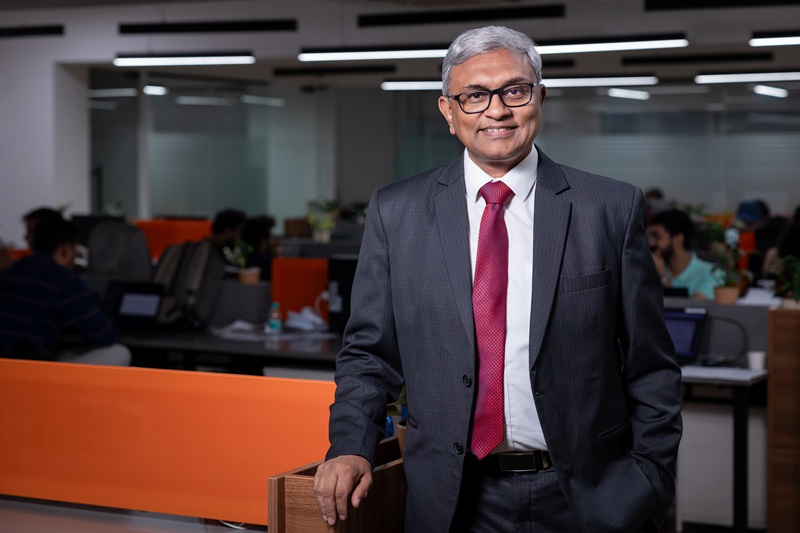
We spoke with Sunil Gupta, Cofounder and CEO of QNu Labs, about the demonstration, what future networks will look like, and India’s National Quantum Mission.

Origins of QNu Labs and the push for digital trust
In 2016, when QNu Labs was founded, India was undergoing a rapid shift from a cash‑based economy to one increasingly dependent on digital transactions, with the emergence of UPI, Paytm, and e-commerce promising to boost the economy. All this, Gupta realised, depended on digital trust, whose foundation was critical to India’s digital future.
However, while examining the underlying infrastructure, Gupta and his team found several weaknesses.
“Globally, we found that digital trust is very old — it’s a 40 year old technology that we’ve been using. It has been very reactive, which means that we are not using the latest technology to protect ourselves. Encryption, specifically, has a lot of technical debt,” he explained.

“We realised that most of the digital trust or encryption that we were using in India, and even platforms like our digital identity platform or our payment platform, were all foreign made products. So the thesis that we built was that India is on the right path in terms of pinning its hope on the digital aspect of the economy. But if we do not transform digital trust and make it ready for the digital economy, then it will not serve the country.”
QNu Labs was thus founded to contribute to the development of sovereign digital trust infrastructure in India, while also pursuing global ambitions. The choice to focus on Quantum Key Distribution (QKD), said Gupta, lay in ensuring that digital remains secure even when cryptographically relevant quantum computers (CRQC) become a reality.
The 1000 km QKD demonstration
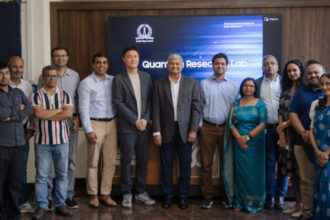
April 2026 marked a major milestone in QKD for both India and QNu, when India’s National Quantum Mission (NQM) announced the successful demonstration of a 1000 km quantum communication network using indigenous technology developed by QNu.
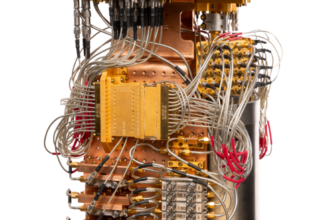
Gupta explained that the achievement was the culmination of several years of product development. The company’s first QKD system, Armos, launched in 2019 and took the form of a product box mounted in a specially-designed rack. The earliest Armos systems supported 60–70 km point-to-point links, an achievement which Gupta said “put India on the quantum map of the world.”
Describing Armos, he said, “Typically, this product is used to generate private keys between two nodes. It could be between two cities, City A and City B. If any user in City A wants secure communication with a user in City B, they can actually put two boxes at the two ends in the data center, in the telecom network. These boxes create quantum-safe private keys, which can’t be hacked, and then you use these keys to encrypt the data.”
However, QNu realised that India’s geography demanded more. Gupta explained, “India is, from north to south, about 2000-3000 kilometers. We realised that 50 km point to point would not work for us if we want to build a large distance network. So we extended it to 200 kilometers point to point — the largest that anybody has done in the world today between any two points. The 200 km boxes can be put in a daisy chain, and we can actually take it to 1000 kilometers. That is exactly what we did. We call those intermediate nodes as trusted nodes. And those trusted nodes can help us put a lot of boxes in a daisy chain and build a wide area network. So when we did 1000 km, we actually used three nodes and five pairs of boxes, and put it in a daisy chain.”
The location remains undisclosed due to its strategic nature, but Gupta shared several performance metrics: “It produced all the required metrics and parameters that are important, for example, a quantum bit error rate of less than 5%, which is very difficult to get in long distance networks. The network uptime was 99.3%. And this 1000 km trial was supposed to happen in five years, but we did it in less than three years.”
The need for hybrid terrestrial and satellite QKD networks
Most importantly, said Gupta, the demonstration was conducted on existing optical fibre. “It was not a specially laid optical fiber. It was already-laid optical fibre by our national telecom network, BSNL,” he said.
QNu now aims to extend the network to 2000 km within two years. However, explained Gupta, networks beyond a certain distance will require more than merely daisy chaining boxes every 200 km, although such a concept is theoretically possible.
“Beyond a certain distance, longer-distance networks don’t make much sense. Because the idea here is that, if one particular link is cut because the fibre is cut or something like that, it is difficult for the whole network to work. That’s the reason real networks, beyond 1000 km, are hybrid networks where you use QKD and PQC. Also, there needs to be a fallback using satellite. Because if the network is cut, you should be able to deliver the keys between those two nodes through a backup mechanism.”
To that end, QNu is developing satellite QKD as well. “We will also have satellite-based QKD, maybe in another 18 months,” he said. He noted that satellite QKD is particularly useful in regions where fibre cannot be laid, such as across mountainous terrain, and envisions a future in which terrestrial fiber and satellite links work together to form a resilient quantum-secure backbone.
He said, “For example, if you look at China, they connected Beijing to Nanshan. There was no optical fibre, because it’s across mountains, so they used satellite. We are going to do the same thing in India. We are going to use optical fibre networks — we call it backbone networks — and then use satellite as a complementary network for locations where it is difficult to reach through an optical fibre. The best value will be hybrid, and that’s the reason QNu is one of the most prominent proponents of hybrid networks.”
The future of network defense
QNu Labs argues that the path to quantum-secure communications will not come from replacing existing networks, but from adding security layers that combine quantum technologies with post-quantum cryptography (PQC).
Gupta argued, “Quantum physics gives you security, but it has less flexibility and a little more cost to deliver that unhackable security. But 95% of the world’s traffic is on fibre optics and undersea cables, so we can’t replace them. I think the best solutions are going to come over the existing networks, where there will be overlay networks, and so on. We bring our QRNG and QKD along with PQC, because what PQC gives you is a software-to-software replacement, algorithm-to-algorithm replacement. It gives you flexibility that it can be done on any type of network. It doesn’t require a specialist network, and the cost is much, much, much less compared to hardware.”
This hybrid network of PQC, QKD, and QRNDG said Gupta, is part of QNu Labs’ broader vision to build a “Quantum Security Dome”: a holistic, all-encompassing digital defense network that sees cybersecurity as critical to a country’s strategic posture.
He said, “In today’s world, cybersecurity is the biggest challenge, because our drones, our satellites, are all interconnected digital systems. Today is a world of dual-use technologies. So technology that we use for enterprise is also used for defense and vice versa. Drones will be used for agriculture and peaceful purposes. Satellites will be used for weather, surveillance, and so on. And terrestrial networks will also be used.”
“We are going to see a very different world where different systems will be integrated and work as a ‘system of systems’ or a ‘network of networks’. In that situation, we can’t have any weak links, so we started looking at terrestrial networks, drone networks, and satellite networks, and quantum safe networks. So the Quantum Security Dome is about building three layers of quantum security over these three layers of capability, so that we provide a complete end to end security to the world.”
India’s National Quantum Mission
QNu Labs is one of the first companies funded by India’s National Quantum Mission (NQM), established in 2023 as part of the Department of Science & Technology (DST), to drive the country’s quantum initiatives.
Gupta described the NQM as “one of the most successful India’s missions, because of the type of impact they’ve been able to create.” One of these impacts, said Gupta, has been to accelerate the progress of quantum technology development in India.
“I would say that the National Quantum Mission, in just a matter of two years, has really accelerated India’s journey by many years. What we would have otherwise done in probably 10 years, the country has achieved in two to three years.”
One of the aims of the NQM, said Gupta, is “to achieve self-reliance of self-reliance for India in quantum computing and quantum sensing, and all the four verticals,” and remarked that it has supported the entire spectrum of quantum companies in service of that aim.
The result has been an interconnected ecosystem with quantum startups that are able to support one another.
Explained Gupta, “A lot of great companies have come up in all areas. And the good part is that all are complementary. For example, there’s a company who is setting up quantum computers in the data center. Now they can use us or other capabilities in India to secure their data centers. Then there are companies who are building detectors — superconducting nanowire detectors. I can use those detectors in my QKD products. So there are companies who are building sensitive, important components. There are companies building secure communication technology, and then there are some companies who are building quantum computers.”
Ultimately, Gupta explained, the NQM also seeks to shift India from being a consumer to a provider of technology.
“This is a mission that is making India self-capable, self-reliant, and actually building India for global contribution. The whole idea is that India wants to be not only a consumer — India was always a consumer — what the National Quantum Mission has done so far is helping India become a builder of the technology. But what is going to happen in the near future, and it’s already in the works, is that India will start deploying technology and start supplying this technology. From a consumer, we are going to become a deployer, user, and as well as a provider of technology, and I think that is the change that the world will see soon,” he concluded.