

SGInnovate, a deep tech investment platform owned by the Singapore government, has been one of the most active investors in Singapore’s quantum startup landscape. Its first investment was made as early as 2018, when it led the seed round for Horizon Quantum, a quantum software company spun out from the Singapore University of Technology and Design (SUTD).
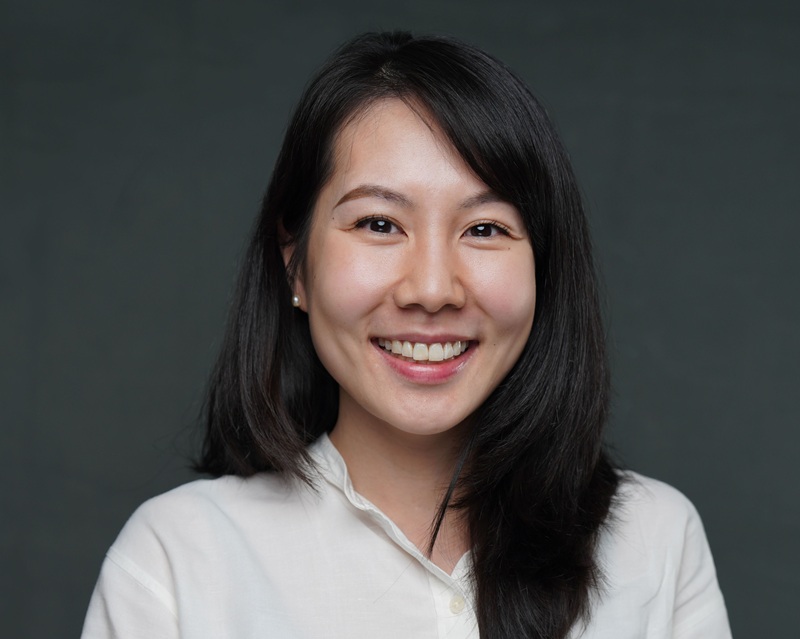
On the sidelines of CYSAT ASIA 2026 – the first space cybersecurity conference in Singapore – we spoke with Kellie Chan, Assistant Director of Gen AI, Cybersecurity and Quantum at SGInnovate, to find out more about SGInnovate, its role in Singapore’s quantum ecosystem, and the startups it has invested in.

What does SGInnovate do?
SGInnovate invests in early stage emerging tech startups to address Singapore’s future economic needs and mitigate some of the potential threats. So we look at very broad areas, from agrifood, sustainability, new materials, to space and advanced manufacturing. As for myself, I specifically look at AI, cyber security and quantum.
For seed and Series A, we mostly invest in Singapore-based companies, but also globally if it’s cutting edge technology. So our portfolio is made up of not just Singapore-headquartered companies, but companies that are headquartered in other countries as well. In terms of the number of products, our portfolio that is based out of Singapore is definitely a bigger chunk. But in terms of the dollar value, the percentage is perhaps tilted a little bit more towards the overseas companies, just because we tend to invest in slightly later stage companies. These tend to be companies that are perhaps looking to Asia, and they’re looking for strategic investment – that’s where SGInnovate comes in and helps.

How do you determine which companies to invest in?
We identify companies in each area we invest in. But before we can do that, we also need to understand the space. So in each of the individual spaces, what we usually do is, we speak to people in the market, in the industry. We try to understand what are the areas where they face challenges, and what are some of the things they’re looking for 10 years down the road. Then we build an investment thesis, and we’ll go out hunting for companies that fall in these areas. We will then evaluate the company to see if it’s investable before making an investment decision.
When did SGInnovate start looking into quantum?
For quantum, we have been monitoring for perhaps the last decade or so. I think we’re actually one of the early investors in the local ecosystem. The first investment we made was back in 2018 [Horizon Quantum Computing]. At that point in time, we realized that maybe in the next 5-10 years, quantum could potentially be adopted by the industry. So that’s why we started investing at that point in time. But that said, quantum is still relatively nascent compared to some of the other areas that we are focused on. So it requires investors with very patient capital, and a lot of support as well. We have companies that we invested in eight years ago, and they’re still, currently, building their product. They’re not yet at the end point.
Could you talk a bit about Singapore’s National Quantum Strategy and what SGInnovate is doing to support it?
The Singapore National Quantum Strategy, I believe, has four strategic thrusts. One of them is scientific excellence – having more research coming out, and strengthening engineering capabilities in order to be able to bring it out to market. So you need to develop a pipeline of talent, given this very niche area, as well as promote industry collaborations.
SGInnovate’s place in this whole big picture is, we are investors. What we have done – we have a couple of portfolio companies like that – is identify commercially viable research coming out from Institutes of Higher Learning (IHLs), like the Centre for Quantum Technologies (CQT), for example, and we provide early capital.
Following that, the researchers within the company will very much focus on the research, and then we’ll be very much focused on bringing them to market, and understanding what the market wants. We provide capital to help them hire their first people, and help them bring it out from the lab, and then eventually, ideally, be able to sell it to some end-user customers.
But it really depends on the strategy of the quantum companies as well. I think at this point in time, there’s still a lot of awareness required, so a lot of it is generating awareness among the corporate sector for them. I think a lot of the corporates don’t mind trying quantum, but after trying, what’s next?
What are some of the quantum companies you’ve invested in?
SpeQtral, for example, is a CQT spin off. We invested in them quite early on. They were incorporated in 2017, and immediately after, we invested in the company. Also another company called Horizon Quantum, which was started by a professor from the Singapore University of Technology and Design (SUTD). We took them in from the start, when he incorporated his company, all the way to now.
All in all, we have invested in quite a number of quantum companies. We put the quantum companies into three different categories. One of them is quantum computing, and then we have quantum communication, and quantum sensing and metrology. And we have invested in each of these markets. Horizon Quantum, for example, is in the quantum computing space, along with Entropica Labs. In quantum communication, where we talk about cryptography and things like that, we’ve invested in SpeQtral, and also another company called pQCee. And then in quantum sensing, we have a company called Atomionics, which is building a quantum gravimeter.
Could you describe Singapore’s quantum ecosystem and how you’d like to see it develop?
Ideally, what we’d like to see is perhaps to have more companies being spun out, so that we have a little bit more of a vibrant ecosystem here. We work very closely with a lot of our IHLs to really understand and keep our finger on the pulse regarding the quantum innovation that’s happening. Also, the National Quantum Office (NQO) has funds to help run different programs and initiatives to grow this ecosystem as well. There are many different players in the ecosystem that have their role to play, and hopefully, ideally, we can get more startups being spun out from the universities. Then they will be able to attract more talent to come to Singapore, and we’ll also be able to train internally as well, and then bring investors here to invest in these companies.
For the past year or so, quantum has featured quite prominently at events organised by SGInnovate and government agencies. Why is this so?
With advancements happening within the quantum space – people are talking about having a quantum computer ready by 2030 or so, and being able to crack classical cryptography – I think people see a threat coming. And so they are starting to prepare for that. We sort of saw this trend, so this is an opportunity for us to then jump in and invest in companies that are perhaps addressing some of these challenges. Having events really brings together the different communities, where we can have discussions and perhaps shape the future of the space.
Lastly, is there any particular area within quantum that you find especially exciting?
I think quantum networking could potentially be very interesting. Right now, a lot of the conversation is about individual quantum machines. But eventually, when they become commercially available, they will be geographically distributed, and then it would only make sense for them to be interconnected in order to be able to scale. It’ll no longer just be about how many qubits each computer can have, but how do you then connect one quantum computer with another? And sometimes, across distances, optical fiber itself is not enough, so space becomes inevitable – you’ll use satellites for these kinds of communication. So I think satellite-based quantum communications will come in very handy to connect quantum computers across geography.