



Universal Quantum, the company building large-scale quantum computing systems for real-world use, has secured over $100 million in Series A funding. This marks the largest Series A ever raised by a quantum firm headquartered in the United Kingdom.
The funding will accelerate the company’s global expansion, as well as the development and commercialisation of its modular technology, advancing a path towards fault-tolerant quantum computing.

The round was co-led by DCVC and Firgun Ventures, with participation from EDBI, Artal (advised by Invus), Integral GlobalTech, Main Sequence, Hostplus, NGS Super, IAG Capital, EdenBase, Eigenstate Holdings, SiteGround Capital and Dave Baszucki (founder and CEO of Roblox), as well as other existing and new strategic investors including Nauta Capital and The Venture Collective.
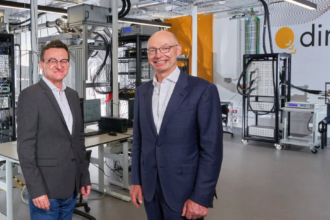
“Universal Quantum’s progress reflects our partners’ belief that we represent one of the most credible paths to quantum computing at scale,” said Sebastian Weidt, CEO and co-founder of Universal Quantum. “This round unites an extraordinary group of investors from the world’s most important pools of capital around a single mission: delivering utility-scale quantum computing.”
The new capital will drive the continued development and commercialisation of Universal Quantum’s modular approach to building the quantum computers needed for practical, error-corrected use. It will leverage the company’s patented interconnect technology and advanced integrated chips to develop the chiplet arrays and control systems required to reduce engineering risk and accelerate the path to larger-scale quantum computers.
The funding will also support Universal Quantum’s recently announced expansion in Singapore, where it is establishing its first R&D centre outside Europe, as well as expansion in the United States, Japan and across its German hub in Hamburg.
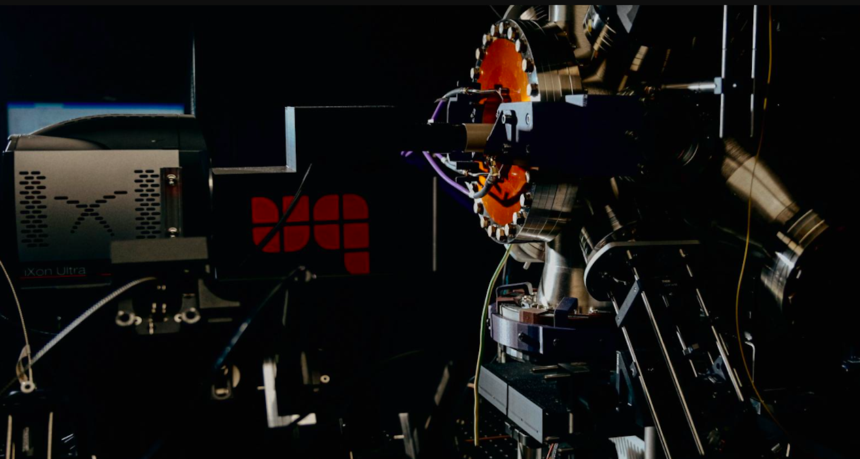
Universal Quantum’s computers are designed and built by linking together, or tiling, many small, advanced quantum chips to deliver the overall high-quality qubit count required to solve problems classical computers cannot — without reliance on photonic interconnects or large, costly lasers and cooling infrastructure.
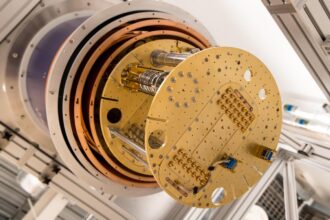
Each chip uses trapped-ion technology, where charged atoms held in place by electric fields act as qubits. Universal Quantum’s approach is designed to connect these modules in a practical, manufacturable way, creating a route to the scale needed for fault-tolerant quantum computing and giving industry partners a clearer path to quantum utility.
Analysts forecast that the quantum technology market could be worth $60-100 billion annually by 2035, while helping to unlock up to $2.7 trillion of economic value worldwide in sectors such as pharmaceuticals, finance and automotive.
Universal Quantum’s raise reflects a broader shift that has seen the flow of serious institutional capital into quantum computing. The company has grown from its UK roots into a global business, establishing a significant role in a highly competitive and strategically important sector.
Now delivering against a $77 million contract with the German Aerospace Center (DLR), Universal Quantum is establishing a permanent presence via an R&D centre in Singapore, with further international collaborations to be announced soon.
“True quantum utility will be unlocked by companies that are relentlessly focused on the scalability of their machines,” said James Hardiman, general partner at DCVC. “Universal Quantum’s modular architecture addresses the hardest challenges in scaling ion trap systems. Quantum is a global race, and we are pleased to back a team with genuine standing across Europe, Asia-Pacific and North America.”
Bill Bartee, managing partner at Main Sequence, said that in a sector where hype and hyperbole are running far ahead of commercial reality, Universal Quantum has built a paying customer base that includes some of the world’s most demanding scientific and government institutions, and has done so before most competitors have shipped any working hardware.
“We believe quantum computing will be one of the defining technologies of the coming decades, and that the companies which reach utility-scale will be those that combine deep technical capability with commercial discipline,” said Evren Bilimer, managing director at Invus.