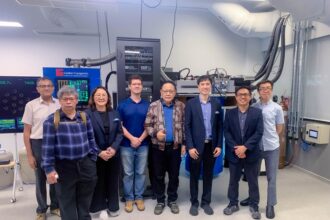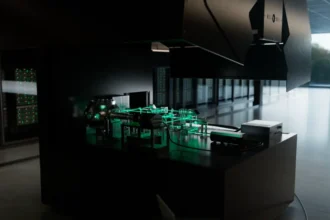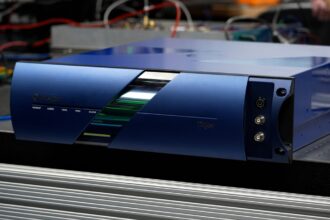



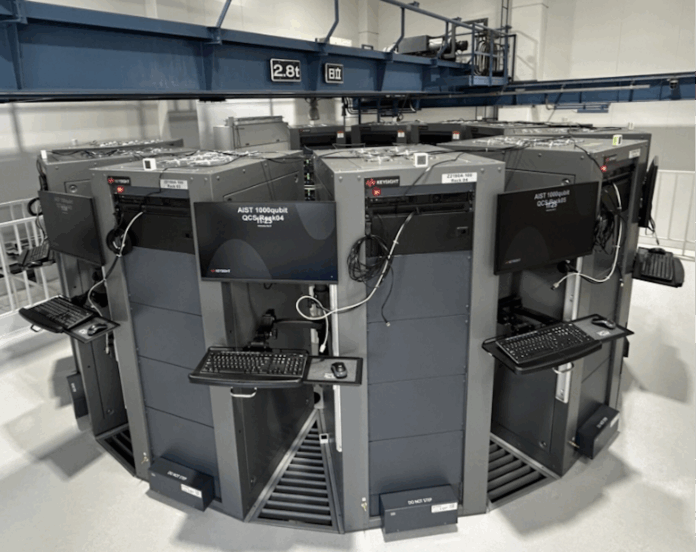
The National Institute of Advanced Industrial Science and Technology (AIST) in Japan has received delivery from Keysight Technologies of what is touted as the world’s largest commercial quantum control system (QCS).
The system has been integrated into the Global Research and Development Center for Business by Quantum-AI Technology (G-QuAT).

This control system is now part of the new evaluation testbed at G-QuAT, which will push the limits of what is possible with quantum computing in terms of both scale and performance.
All quantum computers require a control system to translate from the classical world of code and cables to the quantum world of photons and qubits. As quantum computers grow in size, complexity, and performance, requirements for the control system become much more stringent.
Any gap in the control system performance can compromise the capabilities of the quantum computer, so it was important for AIST to select the right partner for this critical component.

Thanks to early investments in scalable architecture, Keysight was able to deliver this control system capable of powering leading-edge quantum computers. Extensive testing demonstrated that rigorous requirements on noise, time alignment, and phase coherence are maintained across the system.

“The 1,000-qubit control system developed here is a groundbreaking device, the world’s first and largest of its kind, realized through Keysight’s exceptional engineering capabilities in response to our advanced technical requirements,” said Masahiro Horibe, deputy director of G-QuAT.
Horibe said the advancement of quantum technology requires not only theoretical progress but also sophisticated engineering to support it.
“This system has enabled the precise synchronization, control, and readout of complex multi-channel signals, making large-scale qubit operations possible,” he added. “It is a clear demonstration that engineering is paving the way for the future of quantum technology.”