


The European Union has granted 25 million euros to the Supreme consortium, marking a significant milestone in industrialisation of superconducting quantum technologies across Europe.
Together with national funding from the member states, the total funding adds up to 50 million euros.

Key objectives of the initiative include developing stable superconducting technology and giving access to it for both industry and academia. The first phase will commence in early 2026 and span three and a half years, bringing together 23 partners from eight Member States.
Supreme is launched with the mission to industrialise superconducting quantum technologies and strengthen Europe’s position as a global leader in quantum innovation.
The aim is to develop scalable and stable fabrication processes for superconducting quantum devices and make them accessible to European SME’s, large enterprises, startups and academia.
The project has a total budget of approximately 50 million euros, with funding provided equally by the EU Chips Joint Undertaking and national funding agencies. The funding has been approved to cover the first phase of the initiative, spanning 3.5 years.
“This initiative has been set to strengthen the European quantum ecosystem. We will make sure that the innovations developed through Supreme can be widely adopted by businesses across Europe, ultimately delivering significant market impact,” said Pekka Pursula, VP for microelectronics and quantum technology at VTT Technical Research Centre of Finland.

“To support this, we will execute on an ambitious roadmap, which will guide and accelerate the industrialisation of superconducting quantum technologies,” added Pursula, who is also coordinator of the Supreme consortium.
The key objective is the development of stable technologies and giving access to them for industry and academia. A significant milestone will be fabrication and demonstration of a 3D-integrated qubit module containing 200 qubits.
This will showcase the improved stability, higher yield and improved reproducibility of the key fabrication processes for superconducting quantum chips.
Supreme focuses on developing and validating key quantum processes, including angle-evaporated junctions, etched junctions, 3D integration and hybrid processes for applications in quantum computing, quantum sensing and quantum communication. The aim is to reach technology readiness level TRL 6 and manufacturing readiness level MRL 6.
To maximise impact, Supreme will make its fabrication processes available for companies by offering piloting services. Access to the technologies will be given through Process Design Kits (PDKs) and pilot runs to enable companies to design and develop their own quantum devices and systems.
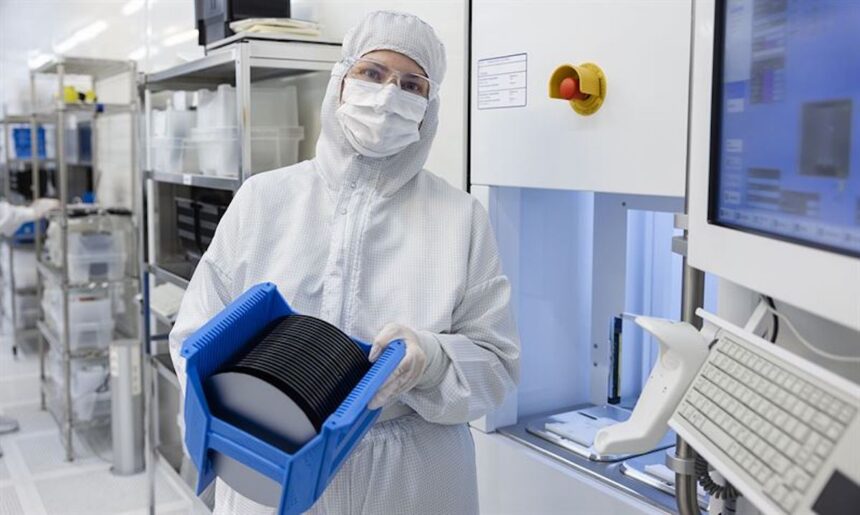
Shared fabrication runs are particularly beneficial for early-stage companies, allowing sharing the cost of full wafer fabrication run between many users. Process design kits (PDKs) provide design rules and validated process specifications.
Consortium partners
The consortium combines European expertise in superconducting technology from academia, RTO’s, industrial technology developers and end-users.
The consortium involves the following 23 partners from eight EU member states.
Partners from research organisations and academia include VTT, coordinator (Finland); TNO (Netherlands); Delft University of Technology (Netherlands); Bayerische Akademie Der Wissenschaften (Germany); Fraunhofer Gesellschaft für Angewandte Forschung (Germany); Max-Planck-Gesellschaft (Germany); Leibniz Institute of Photonic Technology (Germany); The French Alternative Energies and Atomic Energy Commission – CEA (France); University of Naples Federico II (Italy); Fondazione Bruno Kessler (Italy); Institut de Física d’Altes Energies – IFAE (Spain); and Silicon Austria Labs (Austria).
Large-enterprise partners include Infineon Technologies AG (Germany) and IQM Finland Oy (Finland).
Small- and medium-enterprise partners includeArctic Instruments Oy (Finland); Alice & Bob (France); QuantWare (Netherlands); Single Quantum (Netherlands); QphoX (Netherlands); Peak Quantum (Germany); Silent Waves (France); Amires, The Business Innovation Management Institute (Czech Republic); and Qilimanjaro Quantum Tech (Spain).