
Founded in 2017, SpeQtral is a spin-off from Singapore’s Centre for Quantum Technologies (CQT), and was established after several years of R&D in satellite-based Quantum Key Distribution (QKD). In November 2025, SpeQtral launched its first satellite SpeQtre, with a mission to demonstrate satellite-to-ground QKD.
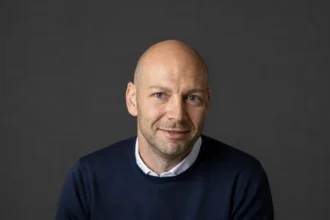
We spoke with Dr. Robert Bedington, Co-Founder and Chief Technology Officer (CTO) of SpeQtral, to find out more about CQT’s QKD research, SpeQtral’s plans, and why satellites are the most practical solution for global QKD coverage.

The history of entanglement-based QKD at CQT
CQT’s experiments in QKD began with the institute’s inception in the year 2007, building upon the work of its founding director Artur Ekert who, in the year 1991, came up with an ultra-secure type of QKD based on the principles of quantum entanglement. A team, led by Prof. Alexander Ling, began building and testing components for entanglement-based QKD.
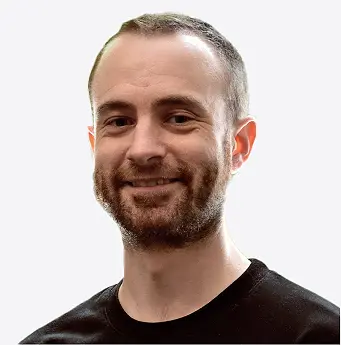
“There’s a strong tradition of doing entanglement-based QKD at CQT, which is one of the more sophisticated, more secure forms of QKD. It’s a very, very elegant solution. And they realised that you could potentially make quite a compact source of entangled photons, and make this fairly rugged and tough, and so, although it’s one of the harder ways to do QKD, it was the way which they decided to proceed for their satellite missions at CQT,” explained Bedington.
Bedington described how the first demonstrations took place at the National University of Singapore (NUS) campus, with telescope-to-telescope links between buildings. The team later experimented at different locations and environments, including over the Grand Canyon and using weather balloons, which required the devices to be progressively miniaturised and ruggedised. Eventually, they were convinced of the feasibility of satellite-based QKD.

Said Bedington, “They put them on weather balloons, and showed that they could survive the rapid temperature changes and the swinging around underneath the balloon. And then they went on to do compact payloads for other people’s satellites. These weren’t fully entangled systems. These were just some of the components, optics and electronics that would be needed for an entanglement system, that they tested on the balloon, and then on the satellite GOMX-2 – that one was launched shortly before I joined CQT [in 2014].”
From SpooQy-1 to SpeQtral
Around this time, the barriers to entry were lowering for the space industry. A new class of very small satellites, known as CubeSats, was being introduced as a low-cost alternative to the large and prohibitively expensive satellites the industry was used to. With this CubeSat revolution, as it is now known, it became possible for small companies and universities to build and launch their own satellites, often for experimental purposes. GOMX-2, built by the company GOMSpace and launched in 2014, was one such CubeSat. It was on this satellite, shared with others, that CQT first launched a QKD component into space.
Following GOMX-2, CQT decided to embark on a multi-year programme to build its own satellite, SpooQy-1. Bedington, a space scientist working on miniaturising plasma analysers for Japan’s space agency JAXA, joined CQT at this point. In parallel, CQT was also building the Small Photon-Entangling Quantum System (SPEQS), to be launched on the CubeSat Galassia in 2015. Galassia, and then SpooQy-1, would mark significant steps towards space-based QKD.
Bedington explained the technology behind SpooQy-1, saying, “SpooQy had a fully-entangled photon pair source inside – there’s a light source inside the satellite laser that shines into some crystals, and then the crystals convert some of those photons into pairs of photons that are entangled in their polarization. They have a special correlation between them that can’t be explained by classical physics, but can be exploited for things like key distribution. That was the kind of the next step we were taking. So the pairs of photons are produced at one end of the experiment, and then detected at the other end of the experiment and verified that they are actually entangled”.
In 2016, while SpooQy-1 was being developed, China launched the 600-kg satellite Micius, which demonstrated a full, end-to-end, entanglement-based QKD system. Micius caught the world’s attention, especially that of organisations such as aerospace primes, who wanted the highest levels of security that technology could offer. For CQT, these were the first signs that QKD satellites could become a viable business.
Said Bedington, “From the beginning…we’d sort of toss the idea around that maybe we should do a company around this. But it only really became more serious once the Chinese mission launched. Then there were more and more companies that were coming to the university saying, ‘Do you make that technology that the Chinese are doing? Because we want to buy a copy of that.’ And as a university, we were not in a position where we could do that. But it made us realise that there was actually a market for this.”
SpeQtral was incorporated in November 2017 – even before SpooQy-1 was launched – and soon after the launch held its first investment round led by Space Capital, an investment fund from US VC firm Space Angels. Other investors included Shasta Ventures, SG Innovate, and Golden Gate Ventures, along with other smaller offers.
SpeQtre: The first full QKD CubeSat in the world
In November 2025, SpeQtral launched its first satellite SpeQtre, whose mission is to demonstrate end-to-end QKD using the entanglement-based BBM92 protocol. Like SpooQy-1, SpeQtre will generate entangled photon pairs, but will also transmit secret keys to two ground stations on earth – one at CQT, and the other at Oxfordshire in the UK, owned by RAL Space, with whom SpeQtral has collaborated for this satellite.
Bedington explained, “SpeQtre takes us from just an entangled photon source to a full QKD system. There’s a new entangled source inside the satellite, so it’s a more powerful, upgraded version of the one that’s on SpooQy, and it’s producing pairs of entangled photons up in space. One of each pair of photons is sent to an onboard receiver inside the satellite. And the other of each pair of photons is sent down to the ground via a telescope on the satellite. The telescope points down to the telescope on the ground, and then the other photon is detected on the ground. We have the pairs of photons – one of each is measured in space and the other on the ground. And so, as the satellite flies over, it points to the ground station and it has a bright laser beacon so the ground station can see where it is, and the ground station has a laser which it shines up so that the satellite can see the ground station. And then the two sort of lock on to each other. And through that lock, they can then send the quantum signals, which are incredibly weak – they’re at the single photon level, and you can’t see them at all. But they’re using the same path. And they do that to share this encryption key, basically. So the photons detected on the satellite will be the same as the photons that are sent to the ground, and these can be used as a shared secret for establishing encryption keys.”
SpeQtral-1, and, the nuances of QKD protocols
SpeQtral also plans to launch a second satellite, SpeQtral-1, which will be a product demonstrator offering two QKD protocols, BBM92 (also on SpeQtre), and BB84.
Bedington said, “The idea of SpeQtral-1 is that it should be capable of performing a wide range of different types of key distribution. We feel that there is a spectrum to play with here: (1) the highest security of secret bits that we can deliver, which are very expensive and have a very low data rate, and (2) relaxing some of the security assumptions to reduce the cost and increase the number of keys produced. Because for some users, security is everything and there’s no compromise allowed, and therefore the budgets can be larger. But for other commercial users, that maybe isn’t justified. So it depends on what you are trying to protect yourself against, or what are the capabilities of your adversary.”
He continued, “On the most secure end, we have entanglement-based QKD. That’s the hardest one to do, and it has the most long-term applications. If all goes well in the future, this is what everyone will be using globally. In the nearer term, though, it’s expensive, slow, and overkill for many near-term applications. And if the quantum threat is coming sooner rather than later, then we can’t be so picky about having the ultimate security. So in addition to the entanglement system, there’s a weak coherent pulse system that’s still a QKD system, but it’s based on a simpler, older scheme. It’s actually the most common scheme that’s used on fibres today, called BB84.”
In addition to these QKD systems, SpeQtral will also offer a range of key distribution methods that are not strictly QKD but are still based on quantum principles. For one such method, SpeQtral is partnering with satellite data transfer company Archangel Lightworks. This, said Bedington, will allow for smaller and cheaper hardware compared to QKD systems, and yet still offer sufficient security for most organisations.
SpeQtral’s plans for the future
SpeQtral is using its first two demonstration satellites, SpeQtre and SpeQtral-1, to better understand market needs ranging from preferred hardware size and security levels, to whether customers are comfortable relying on third-party operators. Depending on their findings, SpeQtral plans on offering three options – customers can use SpeQtral’s satellites, purchase their own dedicated satellite, or use their own satellite platform along with SpeQtral’s hardware.
Said Bedington, “We do have ambitions to operate satellites. You only actually need a single satellite to provide global coverage. It can’t serve many people, but it can access the entire world. What’s nice is that you don’t need to have an Elon-Musk style multi-thousand satellite constellation right off the bat. You can launch one satellite and then, as user demand picks up, launch another and another and another. While the demand is low, that would be our approach. And part of the exercise of SpeQtre and SpeQtral-1 is to try and suss out how much demand is there really for this, and what should it look like – should it be the larger, more exquisite terminals or the smaller, cheaper ones with the less secure protocols? So there’s still a lot of kind of finding our way through what people actually want and to what extent they’re willing to trust a third party operating them.”
The future of QKD: Fibre vs Satellite
As for the future of QKD, Bedington believes that satellite-based QKD is the most practical option for achieving global coverage, citing limitations with current repeater technology as well as territorial boundaries as obstacles to fibre QKD.
He said, “Fibre QKD is great, but it has a distance limitation. Basically, each link can only be 100 kilometres or so before you need to have another repeater node. And with present day technology, there’s no way to provide quantum security at that repeater node, so the only option is to have conventional classical security, basically stopping anyone from getting inside — physical security. That’s fine within your own territory. “
“But when it comes to connecting, say, Singapore to Europe and to the Americas, having to have a trusted repeater node every 100 kilometres under the ocean is not practical because they have to be physically defended against submarines and whatever kind of stealth break-ins. And if we wanted to communicate over land, you’d have to go through other people’s countries…And just the sheer number of these systems that you would need to go for intercontinental distances…So for that reason, satellites are sort of required for international links,” he concluded.