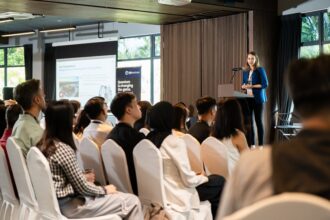


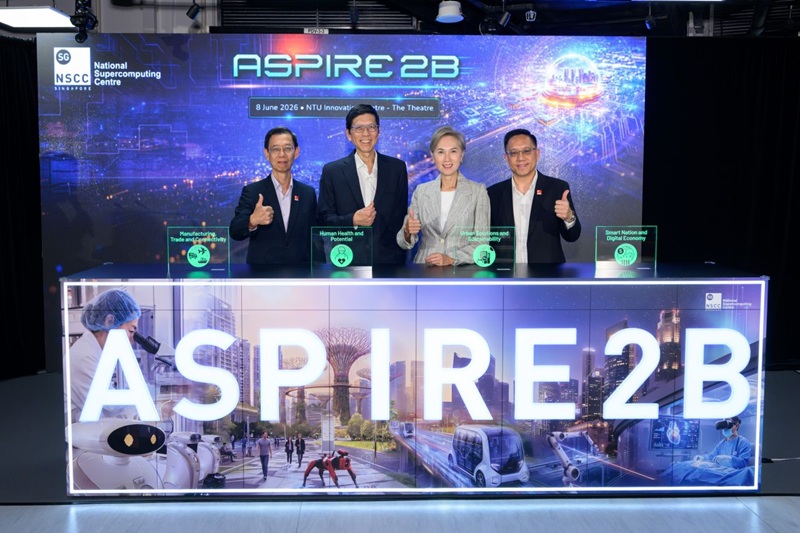
Singapore’s National Supercomputing Centre (NSCC) has officially launched ASPIRE 2B, a next‑generation national supercomputer that will be integrated with a quantum computer later this year. The system was unveiled on 8 June 2026 at the Nanyang Technological University (NTU) Innovation Centre with Minister for Communications and Information Josephine Teo delivering the opening address. ASPIRE 2B, she remarked, significantly expands the country’s high‑performance computing (HPC) capabilities and lays groundwork for future quantum‑classical hybrid research.
The new system incorporates more than 1,500 Nvidia H200 GPUs and delivers up to 115 petaFLOPs, which Teo said far exceeds what is typically available to academic and industrial R&D users. She highlighted the impact of this expanded capacity, noting that models previously too large to train locally can now be developed in Singapore, simulations can run at higher resolution, and workloads that once required overseas compute can be executed on national infrastructure.
AI strategy, research ambitions and sectoral transformation
The launch comes as Singapore advances its National AI Strategy 2.0, introduced roughly 30 months ago. More than 70 companies have since established AI Centres of Excellence in Singapore, including Google DeepMind, Microsoft Research Asia, AMI Labs and Cognition. NSCC alone, said Teo, currently supports more than 700 active users and a wider community of about 9,000 researchers across Singapore’s institutes of higher learning. Since 2024, the centre has enabled over 1,500 projects spanning scientific research and industry applications.

A new National AI Council, chaired by Prime Minister Lawrence Wong, is steering AI missions across four major economic pillars—connectivity, advanced manufacturing, healthcare and finance—which collectively account for over 40% of national GDP. The government has committed over S$1 billion to fundamental and applied AI research and talent development.
Minister Teo emphasised that research remains central to Singapore’s ambitions, both in understanding AI and in using AI as a multiplier for scientific discovery. ASPIRE 2B is positioned as a key enabler of this agenda.
Climate modelling, regional language AI and quantum integration
In her address, Teo outlined three areas where ASPIRE 2B is expected to unlock new possibilities:
- Climate science: Building on the Third National Climate Change Study, researchers will be able to combine physics‑based simulations with AI‑enhanced modelling for higher‑resolution forecasts tailored to Singapore’s urban environment. These insights support long‑term planning under the Singapore Green Plan 2030.
- Southeast Asian language and cultural representation: The system will support continued development of regional AI models such as SEA‑LION and MERaLion, the multimodal model developed by A*STAR that understands Southeast Asian languages and cultural nuances. The region is home to more than 1,000 languages, making local representation a strategic priority.
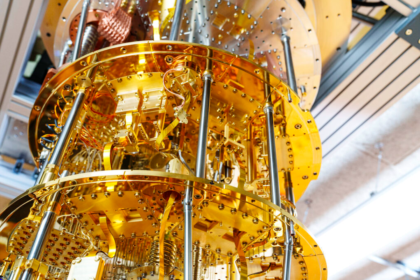
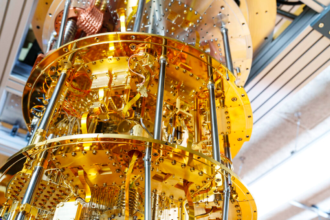
- Quantum‑classical hybrid computing: NSCC plans to integrate a quantum computer with ASPIRE 2B later this year. Teo described this as the beginning of a “new journey,” enabling researchers to explore compute‑intensive domains such as molecular simulation and advanced materials.
Building capabilities beyond hardware
While ASPIRE 2B dramatically expands compute capacity, Teo stressed that success will depend on how effectively the research community uses the infrastructure. She noted that next‑generation AI systems, including agentic and physical AI, will demand even more computational intensity.
NSCC is expected to focus on user enablement, streamlined services and skills development to help researchers fully leverage the new system. The centre’s team will increasingly manage complex workloads, integrate AI and simulation workflows, and support students and scientists in advanced computing techniques.