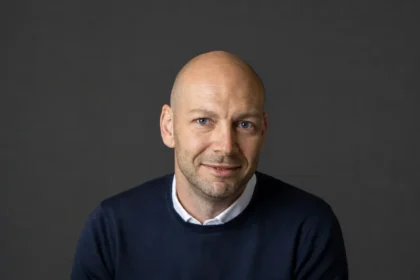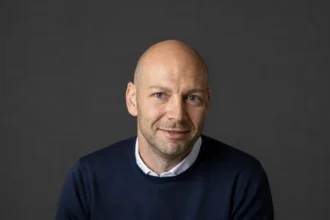
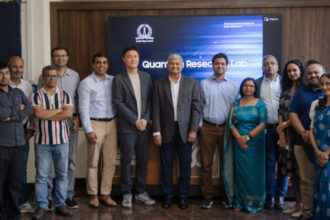




Open Quantum Design CEO Greg Dick discusses OQD’s origins at Perimeter Institute and the University of Waterloo’s Institute for Quantum Computing, why open source has to arrive early in the quantum stack, how working groups can accelerate hardware and software development, and why partnerships in Canada, Singapore and beyond will matter as quantum moves from research labs into industry.
Early days at Perimeter Institute
Greg Dick traces the origin of Open Quantum Design to a Friday afternoon beer at Perimeter Institute. At the time, quantum computing was beginning to feel less like a theoretical horizon and more like an emerging industry. Dick had spent 17 years at Perimeter, first leading education outreach and later communications, international partnerships and advancement. Before that, he had been a high school physics teacher, and the move to Perimeter had originally been meant to last only one year, where he was to help build outreach content.

That temporary assignment became two years, then three. At the end of the third year, both his school board and Perimeter asked him to choose. On a Sunday night, Dick met a friend at Starbucks to talk it through. “At 11 o’clock at night I was headed back to teaching,” he recalls. “Then, driving home, I thought, ‘No, I’m staying at Perimeter.’” The decision became a 17-year career.
Perimeter’s ethos, Dick says, was deeply open: foundational physics, theoretical physics, and cutting-edge discovery. But as his time there progressed, quantum technology began to move beyond theory and even beyond the experimental stage. Roger Melko, one of Dick’s co-founders, had founded Perimeter’s Quantum Intelligence Lab and had been among the first to apply machine learning to quantum systems. Dick found himself increasingly drawn toward the industry forming around quantum.
A quantum computer, a Waterloo IP policy, and a nonprofit mission
Open Quantum Design’s formation also depended on two other co-founders: Crystal Senko and Rajibul Islam, both students of Chris Monroe (Co-Founder of IonQ), with academic pedigrees spanning MIT and Harvard. Together with Melko, they had been developing the idea of open-sourcing quantum technology before it became locked into proprietary stacks.

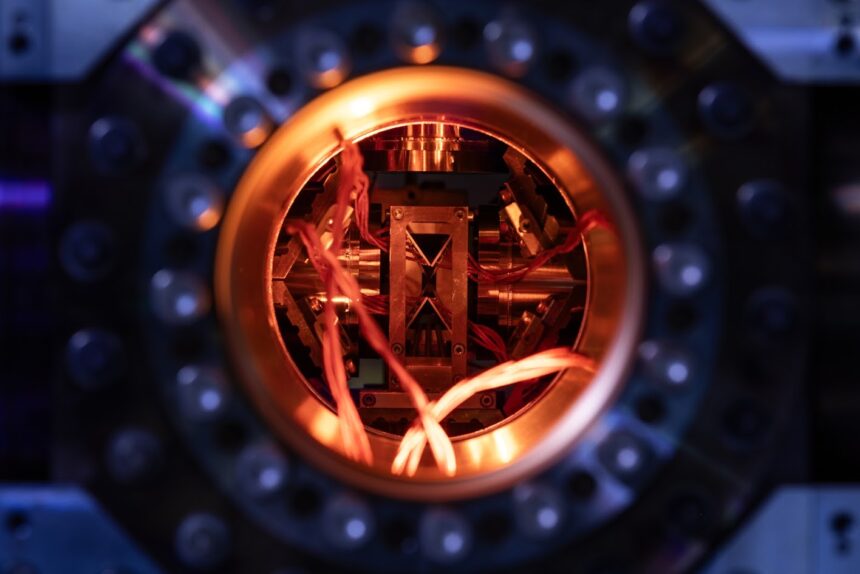
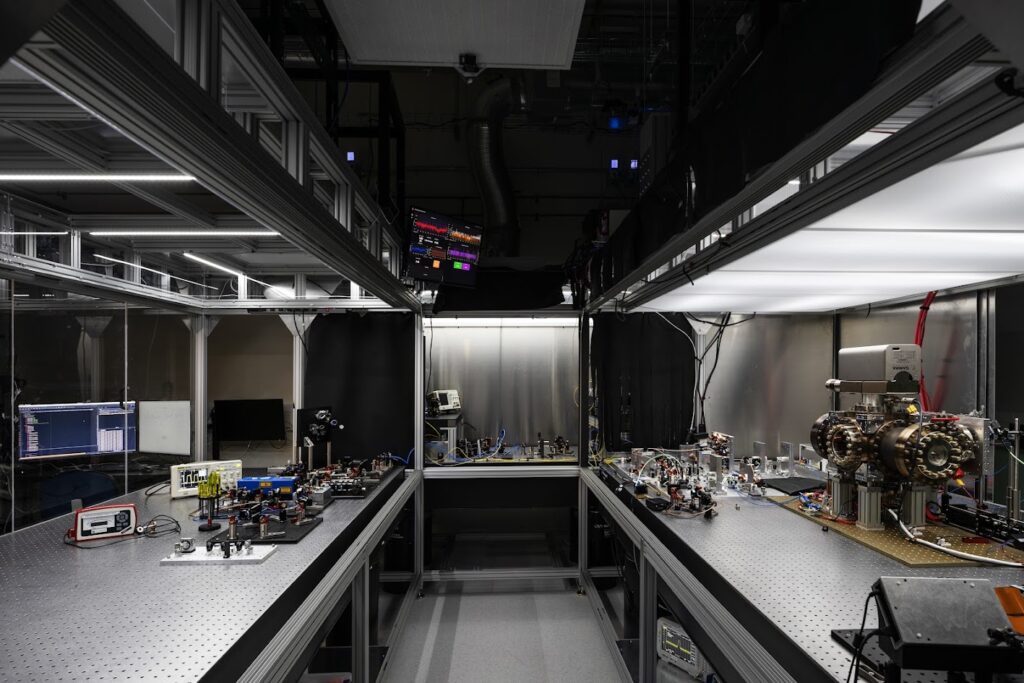
The University of Waterloo’s intellectual property policy made that possible. Dick describes it as “completely inventor-owned and unencumbered.” Senko, Islam and Melko were able to move a decade of research into Open Quantum Design, including the IP behind a full quantum computer. The physical machine sits at the University of Waterloo’s Institute for Quantum Computing and remains a shared research machine tied to the researchers and their students, but the intellectual property belongs to OQD.
That meant the nonprofit started with far more than a concept.
We had millions of dollars of investment, a decade’s worth of effort and research, and all of that was able to move into the nonprofit.”
The transfer also brought along many original contributors, including students who had worked on the underlying technology and shared the commitment to making quantum computing scale for everyone. For him, the hardware is also a symbol of what Open Quantum Design is trying to prove: that a serious quantum infrastructure effort can be open, collaborative and useful to industry without giving up rigour.
Why open source has to arrive early
The mission is animated by a concern that quantum could repeat the pattern of previous technological revolutions. Dick points to projections that quantum computing could generate $2 trillion in wealth over the next decade. In those projections, he says, 90 percent of the profits and wealth generation would go to 10 percent of early adopters, while only about 6 percent of that 90 percent would go to those building the technology itself. The rest would accrue to entrepreneurs, companies and innovators who turn quantum into applications that do not yet exist.
OQD wants that power and potential wealth generation to be distributed more widely, more evenly.
If you look at the Industrial Revolution, the internet, and AI, each has concentrated wealth in the hands of fewer and fewer people. Quantum is an opportunity to turn that on its head and truly share the technology with humanity.”
Open Quantum Design is not trying to replace proprietary quantum companies, he says, but to create a shared infrastructure layer that helps everyone move faster. “Industry comes to play, academia comes to play, entrepreneurs come to play,” he says. “Everybody solves these hard problems together.”
The comparison Dick turns to is Linux: half of internet traffic, he notes, runs over Apache servers, and 98 percent of the top 500 supercomputers run Linux. Open-source alternatives have repeatedly become core parts of digital infrastructure. What is unusual about OQD, he argues, is timing: “Never before had there been an open-source alternative so early in the technology stack.”
OQD’s economist-in-residence, Francesco Bova of the University of Toronto’s Rotman School, has analysed the effect of open sourcing early. The core idea is that collaborative development removes dead ends faster. With more perspectives testing approaches, errors and weak paths are identified sooner, accelerating innovation. For Dick, that provides academic support for the intuition behind the organisation’s model.
The recent DeepSeek moment in AI has also become part of OQD’s policy argument. Dick says it helped when speaking to governments: “Do you want that kind of strategic surprise? If you do not, use the strategic lever of open source now.”
A working-group model for quantum infrastructure
Open Quantum Design launched with founding partners representing four different parts of the ecosystem. The Unitary Foundation brought global reach in the open-source quantum community. The University of Waterloo Faculty of Science brought academic depth and quantum expertise. Haiqu represented the startup world from Silicon Valley. Xanadu brought the perspective of a major quantum computing company.
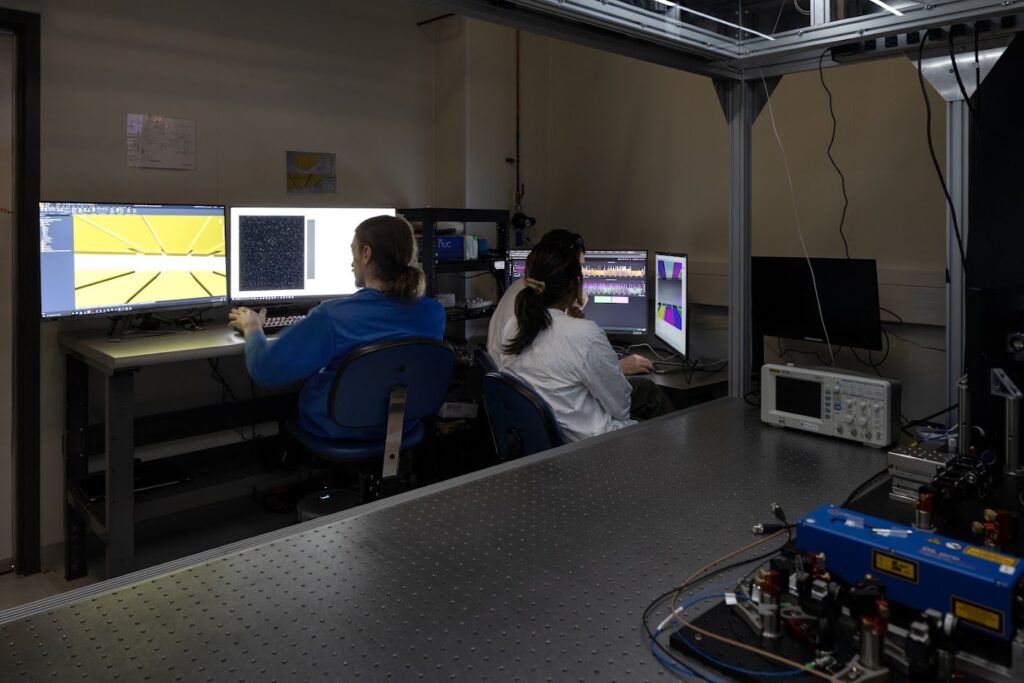
OQD operates through working groups: a common problem is identified, partners come together to solve it, and once a solution exists, participants can use it in their own work. Participation is paid and tiered: leading a working group costs more than joining one. OQD also works with government and philanthropy.
One current project brings together OQD, Xanadu and Haiqu around compilers. Xanadu contributed intellectual property, while participants brought funding and hands-on development. Dick says the return on investment can be dramatic — “three times, five times” — because the shared talent pool accelerates progress and can attract additional funding.
Not every project is fully public yet. OQD has about 35 projects underway, with 10 or 12 GitHub repositories open, but the goal is to open all of them and some hardware and software have already been released. Anyone can inspect, take and use what is open, but Dick believes the deeper value comes from building together. Partners may also use the process for business development, product iteration and early customer engagement.
The model is to be a utility. We want to be the infrastructure that allows hard problems to be solved by all.”
Sovereignty, Singapore and the global build-out
For Dick, the open-source argument is both economic and geopolitical. Canada, he says, has learned that sovereignty matters more than was once assumed. With the United States as a large neighbour, Canada could afford to feel complacent. The current geopolitical environment has changed that, and middle-powers such as Canada and Singapore, he argues, need open infrastructure so they are not beholden to a single vendor or a single nation.
Singapore, Dick says, is an ideal partner: a modern, flourishing economy; a middle power in many ways like Canada; and a gateway to ASEAN communities. OQD has been engaging both with the National Quantum Office and government officials, and with individual companies to explore partnerships. OQD is also seeing global engagement beyond formal partnerships — Dick estimates that one-off interactions span about 35 countries.
OQD began with trapped ions, but Dick says it does not want to remain limited to one modality. Xanadu is photonic. Nord Quantique is superconducting. Melko has worked with neutral atom infrastructure.
If we are successful, Open Quantum Design will be to quantum infrastructure what Linux is to digital infrastructure. We want OQD to be core to quantum infrastructure around the planet.”
Education, CERN and the missing quantum workforce
Education sits close to OQD’s identity. Dick’s own career began in teaching, and he sees workforce development as essential for quantum’s next stage. The organisation has an education working group “bubbling” on the roadmap, but it needs a revenue stream to support it because many of the institutes that would deliver education are themselves nonprofits.
Dick says: “Quantum computing does not need only quantum physicists. It needs physicists, engineers, software engineers, communicators and many others.” Dick sees an opportunity for OQD to become a trusted source of information, to benchmark against proprietary offerings and to support workforce development.
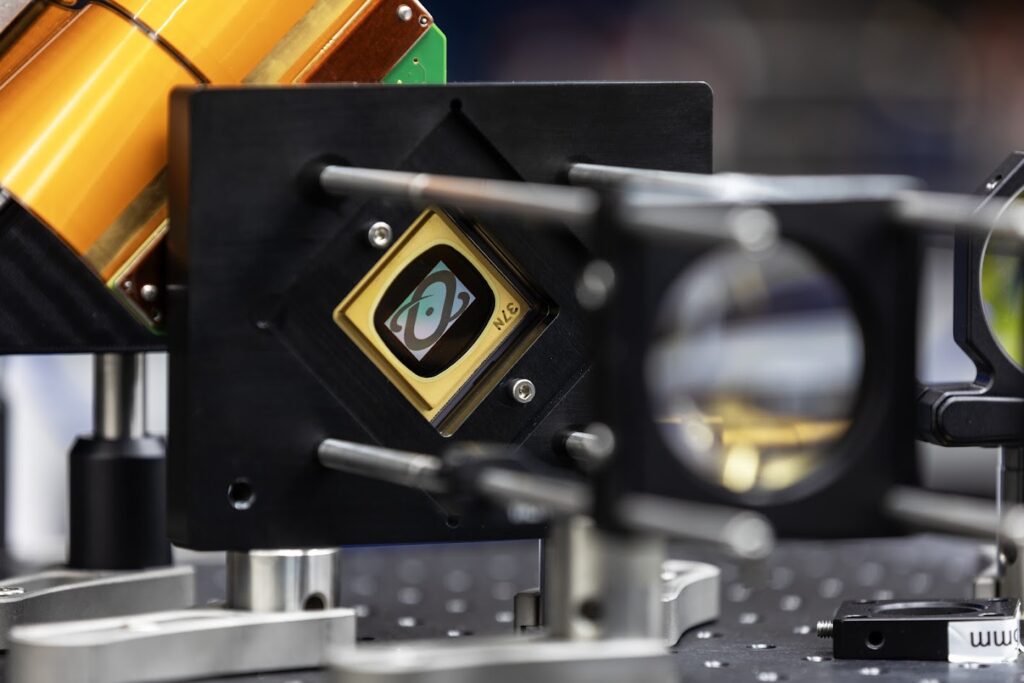
One concrete educational project already has a high-profile user: CERN. OQD has released a demonstrator that mirrors the idea of an ion trap. It is 3D printed and uses small Styrofoam balls floated and trapped by ultrasonic speakers, with small lasers shining on each individual ball as it moves. CERN is using the demonstrator. OQD shared it openly and helped CERN build its version. For Dick, CERN’s use of the demonstrator is a sign of what OQD’s education work could become. “It is a concrete education piece,” he says. “If the education working group becomes more fully developed, CERN would be a core part of it.”
A startup umbrella
Dick believes the quantum industry is already at an inflection point, though he cautions that quantum is not a monolith, with sensors, networking, cryptography and computing all at different stages. Quantum sensors are already doing useful work. Quantum advantage in computing is being demonstrated by some industry players, while Industry leaders, after the initial AI wave, are increasingly asking what quantum means and whether they are prepared.
OQD also wants to be an umbrella and accelerator for startups. One example has already emerged: LightFlow, a Waterloo-based company with one founder in Silicon Valley and one in Ontario. LightFlow makes optical circuit boards through a software-driven process that can reduce board development from a year to three weeks. The lab or photonics company works in the interface, sends the file to a CAD machinist, the part is machined, and the board is assembled “like Lego.” MIT is a partner and Foxconn is a customer.
Dick mentions LightFlow because it reflects what he believes Open Quantum Design is meant to do: create a place where people can iterate, build, spin out companies and still contribute to a shared infrastructure layer. “We are a utility for public good,” he says, “to ensure the wealth generation of quantum is brought to everybody — for the world, not just for Canada.”