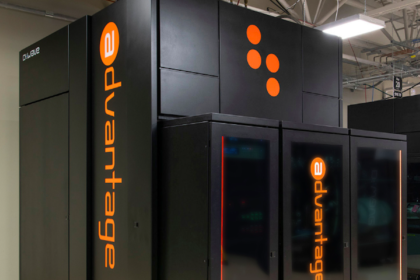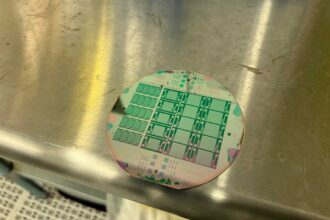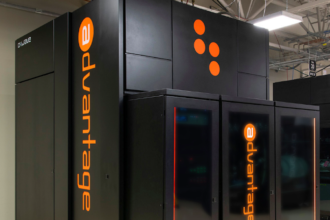

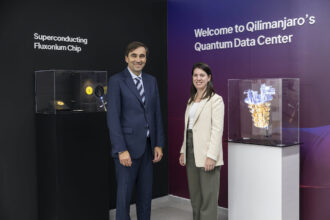


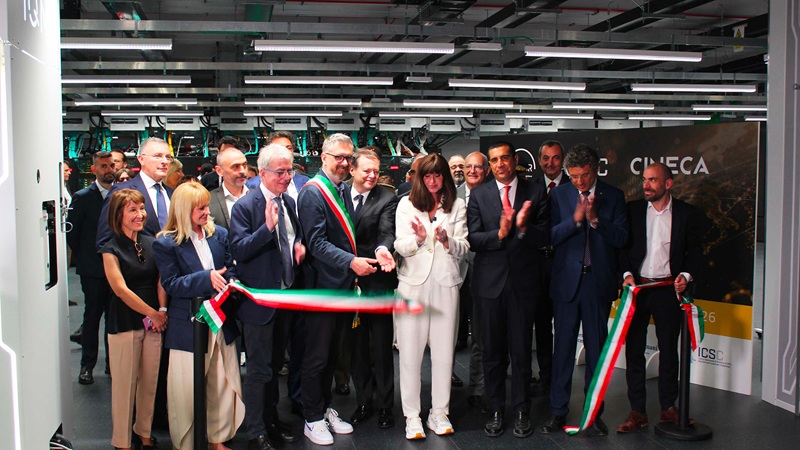
On 11 June 2026, the Italian Research Centre on High Performance Computing, Big Data, and Quantum Computing (ICSC) inaugurated two quantum computers at at CINECA, one of Europe’s leading supercomputing centers. The two quantum computers are: IQM‘s superconducting quantum computer Radiance, and Pasqal‘s neutral atom Quantum Processing Unit (QPU) Orion.
IQM’s Radiance is a 54-qubit system, named NOX, is the first on-premises superconducting quantum computer at CINECA and the second IQM quantum computer in Italy, the first having been installed at Politecnico di Torino.

Meanwhile, Pasqal’s neutral atom system Orion, named SOL, comprises 140 qubits and is Europe’s third Pasqal computer, after France (CEA-TGCC) and Germany (FZJ-JSC). The system was developed by Pasqal within the EuroHPC European programme in collaboration with an international consortium led by CINECA.
Both NOX and SOL will be integrated with ICSC’s supercomputer Leonardo, which will then provide researchers with a production-ready environment for experimentation with integrated classical–quantum computing paradigms. The hybrid architecture, said Pasqal’s press release, will allow users to seamlessly offload specialized workloads to the QPU, while relying on Leonardo for classical processing and large-scale data handling.
The two systems were part of a larger ceremony, during which the ICSC inaugurated a five new systems for high-performance and quantum computing. Aside from the quantum computers NOX and SOL, the systems include (a) LISA, a new “engine” for artificial intelligence developed as an upgrade of the Leonardo supercomputer, (b) GAIA, a system designed for national-scale HPC cloud management, and (c) MARCO POLO, a Tier-1 HPC system that will be used in fields ranging from weather forecasting to large-scale scientific data processing.

The new systems were procured by the EuroHPC Joint Undertaking (JU) and co-financed together with the Italy’s Ministry of University and Research through ICSC.
“This significantly strengthens digital sovereignty and supports national competitiveness. Especially in today’s geopolitical and energy instability, this resource is crucial to avoid falling further behind in the global race for data control and to build a viable and sustainable Italian and European alternative to U.S. technological offerings,” said Antonio Zoccoli, President of the ICSC and the National Institute for Nuclear Physics (INFN).
“This installation is what Production Quantum means to us. Quantum computers you own, operate, and build value on. Real infrastructure inside real environments, doing real work,” said Sylwia de Weydenthal, Chief Commercial Officer of IQM Quantum Computers. “The delivery of IQM Radiance to CINECA is a milestone for Italy and for European quantum computing. It reinforces our role as a strategic partner in delivering Europe’s HPC–quantum infrastructure on the ground.”
“This inauguration is further proof of Pasqal’s ability to execute at scale and deliver quantum systems where they matter most,” said Wasiq Bokhari, CEO of Pasqal. “Across Europe and beyond, we are turning quantum computing from a research promise into deployed, operational infrastructure that addresses real-world scientific and industrial challenges.”