

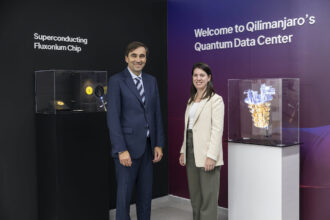



On 8 June 2026, the first BRICS Quantum Technologies Forum was held in Moscow, which brought together scientists, industry experts, and government representatives from BRICS member states and partners, including India, Vietnam, Belarus, China, and others. The forum was organized by the Ministry of Science and Higher Education of the Russian Federation in partnership with Rosatom State Atomic Energy Corporation.
The decision to hold the event followed the 17th BRICS Summit held in Rio de Janeiro last year, where quantum science was identified as one of the priority areas for technological development and reindustrialization across BRICS member states. The first BRICS Quantum Technologies Forum in Russia was subsequently included in the official 2026 BRICS Calendar of Events in the fields of science, technology, and innovation.

The event stated that its overarching goal was “to advance quantum technologies in order to strengthen the technological foundations of BRICS countries and accelerate reindustrialization through the deployment of quantum innovations.”
To that end, it aimed to foster international dialogue and to discuss prospects for cooperation in quantum technologies within the BRICS framework. Priority areas highlighted include scientific and technological development, applications of quantum computing, education, and workforce development for quantum specialists.
India’s interest in collaborating with Russia

India has pitched collaborative efforts in quantum computing with Russia as part of its plans for its US$730 million National Quantum Mission (NQM) targets, which are slated for completion by 2030-31.
Speaking at the event, Indian Ambassador to Russia Vinay Kumar said that the Indian Institute of Technology (IIT) has established four technology hubs in Chennai, Mumbai, Delhi and Bengaluru, which connect researchers and institutions as drivers of human resource development, training and international collaboration. He said that the mandate of these four hubs is international cooperation, with “India looking to collaborate in advanced computing technology. New Delhi wants to take a leadership role in this field, with international collaboration including researcher mobility, startup partnerships and joint innovation efforts.”
Russia-China partnership in quantum communications
According to official Russian sources, Beijing and Moscow are jointly exploring secure BRICS-oriented quantum communication networks capable of resisting cyber interception. The two nations are also cooperating on quantum encryption, satellite-linked communication and advanced computing – projects that are aligned with China’s goal of establishing globally competitive digital infrastructure under its current Five-Year Plan.
Vietnam proposes collaborating on higher education
Speaking to TV BRICS, Professor Tran Tuan Anh, Vice President of Vietnam Academy of Science and Technology (VAST), said, “Our most critical area is the need to develop human resources. And through cooperation mechanisms between Vietnam and research institutes and universities within Russia and BRICS, we can take advantage of firstly, knowledge, and secondly, the sharing of resources and the laboratory infrastructure of these countries.”
Rosatom and Russia’s quantum roadmap
Since 2020, Russian state-owned nuclear company Rosatom has been responsible for the implementation of the nation’s roadmap for the development of quantum computing. Today, Russia possesses seven quantum processors, five of which were developed under the national roadmap, and three of which contain more than 70 qubits. The 2025–2030 roadmap is focused on achieving qualitative advances in Russia’s quantum technology sector and developing practical applications of quantum technologies, particularly within the Russian nuclear industry, where more than 30 pilot projects are currently underway. Beginning in 2026, Rosatom will also expand its research and development activities into the field of quantum sensors.
In his address during the event, Russian Prime Minister Mikhail Mishustin described quantum technologies as one of the most promising innovations of the 21st century and called on BRICS nations to deepen cooperation in this strategic field: “Today, it is critically important to move forward together with our BRICS partners by pooling our research resources. Only through joint efforts can we rapidly overcome technological barriers, create scalable solutions, and ensure their deployment across key industries,” he said.
Valery Falkov, Minister of Science and Higher Education of the Russian Federation, highlighted the considerable potential for scientific and educational partnerships among BRICS nations in quantum technologies. He noted that cooperation among Russian research institutes and universities under the national roadmaps for quantum computing and quantum communications had enabled the country to make significant advances in quantum science, develop quantum computing prototypes, and establish quantum communication networks.
“In the field of quantum technologies, BRICS countries are moving along a common path, developing academic exchange programs, joint research initiatives, and shared infrastructure. Russia is open to partnerships aimed at addressing large-scale challenges in the quantum domain. We believe that we will achieve our goals much faster by moving forward together rather than separately, potentially repeating one another’s mistakes,” the minister said.
The forum also featured a joint statement by members of the BRICS Nuclear Energy Platform, which highlighted the growing role of quantum computing in shaping the energy systems of the future and called on BRICS countries to join forces in advancing quantum computing to unlock the full potential of nuclear energy.