


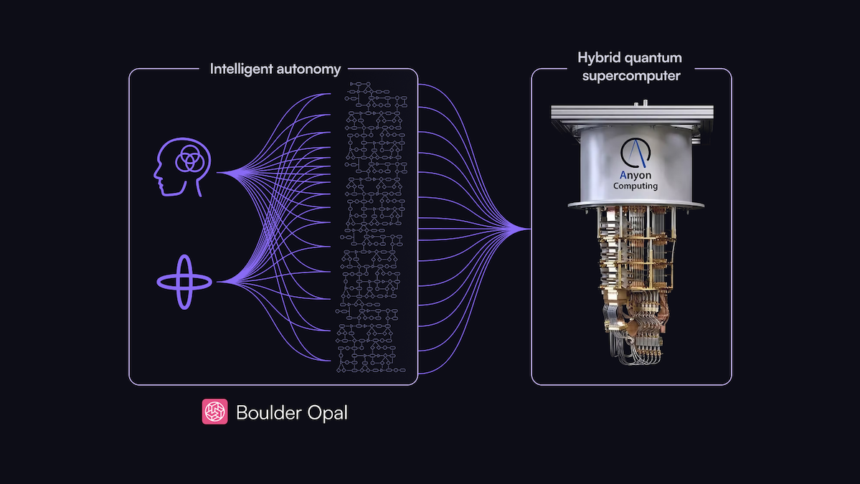
Anyon Technologies, a vertically integrated superconducting quantum supercomputing company founded by pioneers from Caltech and UC Berkeley, and quantum infrastructure software firm Q-CTRL are collaborating to bring full autonomy to Anyon’s tightly GPU-coupled quantum supercomputing systems for data center deployment at scale.
As quantum computing transitions from research labs toward early enterprise adoption, systems need to mature to meet the expectations for modern data center environments.

Today’s machines are highly manual, with bootup, calibration, and maintenance handled by specialist teams over lengthy cycles. The impact on deployment cost and uptime makes this model untenable at scale.
By integrating Q-CTRL’s Boulder Opal intelligent autonomy into Anyon’s modular quantum architecture, the partnership intends to deliver intelligent, data center-ready quantum infrastructure that automatically boots up and maintains its operational state, without constant specialist intervention.
Q-CTRL’s technology delivers autonomous calibration and maintenance, making it possible to embed quantum systems as a stable, on-demand hardware accelerator, ready for quantum workloads.

By maximizing system uptime with sustained, peak performance and eliminating the need for expert manual intervention, Boulder Opal improves the usability and stability of Anyon Technologies systems, making quantum computing suitable for data-center deployments.
Roger Luo, co-founder and CEO of Anyon Technologies, said the company’s modular quantum supercomputers, tightly coupled to NVIDIA GPUs via NVQLink, have been specifically architected for data center deployments.
“But the operational demands of quantum have been a continuous pain point for the company’s customers,” said Luo. “The partnership with Q-CTRL means our users can take full advantage of our hardware from day one and accelerate their quantum projects without having to worry about low-level quantum calibration processes.”
Michael J. Biercuk, CEO and founder of Q-CTRL, said quantum computing won’t scale through manual calibration and specialist operation—it requires systems that run themselves.
“Enterprise deployments depend on stable modular hardware paired with autonomous operational software,” said Biercuk. “Anyon’s vertically integrated superconducting platform provides that foundation, and with Boulder Opal, we’re turning quantum computers into mature systems that maintain peak performance without constant human intervention.