


ESA-ESRIN, the European Space Agency’s Centre for Earth Observation, has installed its first quantum computer, Equal1’s 6-qubit Bell-1 system, at its centre in Frascati, Italy. Bell-1 will be used for Earth Observation (EO) purposes, as part of a Hybrid Quantum Computing (HQC) System that was announced in January this year.
According to ESA, the move marks a significant step in exploring how quantum technology could be merged with classical high-performance computing (HPC) to improve the speed and efficiency of processing huge amounts of satellite data.
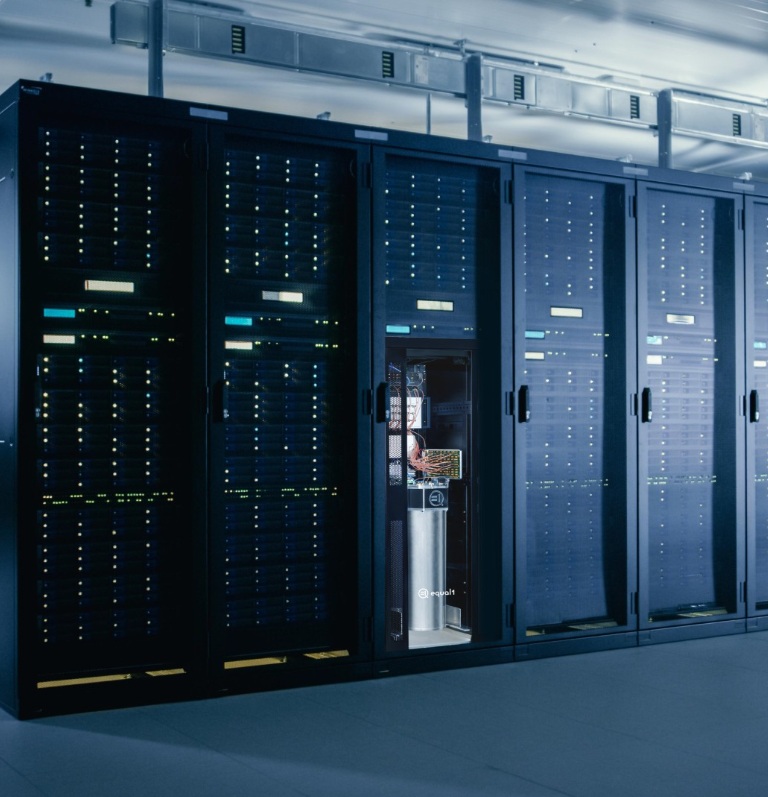
The Bell-1 system

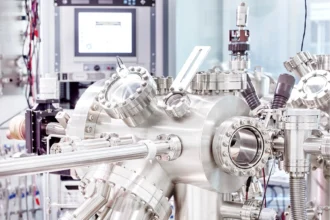
Like all of Equal1’s quantum computers, the Bell-1 system is based on silicon spin qubits, and is designed to run in HPC data centres. According to ESA, this system was chosen specifically because of easy integration with ESA-ESRIN’s Data Centre. Part of the reason for this, said ESA, is because Bell-1’s chips are made using a Complementary Metal-Oxide-Semiconductor (CMOS) manufacturing process similar to what is used to make the chips inside everyday smartphones and laptops.
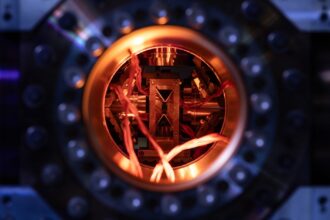
ESA also said that Bell-1 was chosen for its temperature; the system operates around 0.3 kelvin, which is significantly warmer than what other popular quantum computers require, and relies on an integrated, closed-cycle cooler, eliminating the need for external tanks of specialised coolers.
ESA admitted int he announcement that Bell-1 is limited in size, but it can nevertheless provide ESA researchers with direct, on-premises access to quantum computing capabilities. Bell-1 will serve as a testbed for the development and rapid prototyping of hybrid quantum-classical algorithms targeting Earth observation challenges. Researchers will explore potential quantum advantages, benchmark emerging algorithms on real Earth observation datasets, and accelerate the transition from theoretical studies to practical demonstrations.
Bell-1’s role in hybrid computing
After its installation in ESA-ESRIN’s Data Centre, Bell-1 will be available for internal research at ESA for one year after its commissioning. The goal is to operate Bell-1 under a hybrid quantum computing framework: ESA Φ-lab is planning a pilot demonstration of its use by the end of 2026, targeting several use cases investigated during the first phase of the project. Use cases include hybrid quantum neural networks for land use and land cover classification, satellite mission planning, and others to be later defined.

If the pilot phase is successful, it will represent a shift in how the Earth observation field views and uses quantum computing. By the end of the pilot phase, the practical findings from these use cases will be shared with the broader scientific community in a joint workshop hosted by ESA Φ-lab and Equal1.
Recognising the importance of using quantum computing for Earth observation data analysis, processing and modelling, Giuseppe Borghi, Head of the ESA Φ-lab Division, commented: “Earth observation will be entering an era where the scale and complexity of the data will challenge even our most advanced classical computing systems. Quantum computing promises a new way of approaching some of these problems, with the potential to complement the existing high-performance computing rather than replace it.”
“By bringing quantum computing into our Earth observation research environment, we can rigorously test where it delivers real value, develop hybrid algorithms for practical applications, and build the scientific foundations for the next generation of climate, weather and, in general, Earth intelligence”, Giuseppe added.
Earth Observation: A quantum use case
In its announcement, ESA said its satellites generate vast volumes of complex data that support Earth science, climate modelling, disaster response and a wide range of societal applications. As quantities of data continue to grow – and are increasingly analysed using machine learning – the limitations of traditional computing are becoming increasingly apparent. This deluge of Earth observation data, now combined with the power of Machine Learning, requires a move beyond traditional computing paradigms, as classical computers are being pushed to their physical limits.
ESA’s Director of Earth Observation Programmes, said, “Earth observation is entering an era where the sheer scale and complexity of the data challenge even our most advanced computing systems. By bringing quantum computing into our Earth observation ecosystem, we are exploring technologies that could transform how we extract knowledge from satellite data – accelerating scientific discovery while enabling faster, more informed responses to global challenges.”
Brendan Barry, CTO of Equal1, “Our vision is to provide practical, scalable quantum computing that can be readily adopted by organizations like ESA. The integration of our quantum hardware within ESA’s high-performance computing environment will not only accelerate critical Earth observation research but also serve as a blueprint for how quantum and classical systems can collaboratively address grand scientific challenges.”