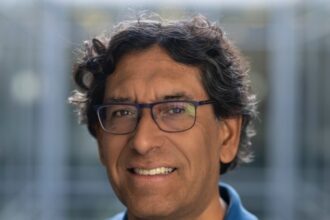
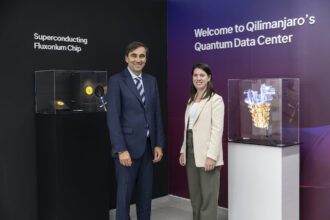



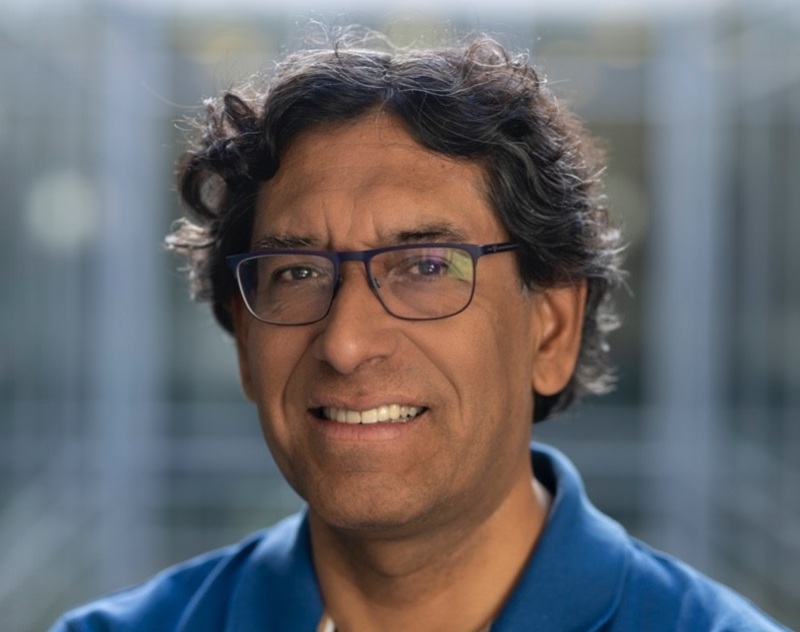
Enrique Solano, Cofounder and Technology Advisor at Kipu Quantum, and CEO and Cofounder at the new startup 6.6 Quantum in Action, has been a well-known figure in the quantum industry for decades. Solano designed the two-qubit gate for trapped ions, used in commercial quantum computers today, and held positions in organisations such as the Max Planck Institute and IQM. He also spent five years as Director of QuArtist Center in Shanghai, gaining firsthand insight into China’s quantum ecosystem, after13 years as Director of the QUTIS Center at the Universidad del País Vasco/Euskal Herriko Unibertsitatea (University of the Basque Country).
In this interview, Solano discusses controversies surrounding government funding and the future of fault-tolerant quantum computing. He also explores how geopolitics could threaten quantum sovereignty and shares his perspective on China’s quantum ecosystem.

Europe’s quantum funding dilemma
The global quantum ecosystem faces a challenge that extends beyond the availability of capital and research expertise: converting resources into tangible technological and industrial results. Solano argues that the inefficiencies are particularly visible in Europe, where announcements of substantial investment have not always translated into corresponding progress.
He said, “Everybody’s talking about how much money we invest. And I just don’t care. If you tell me you’ve invested nothing and the outcome is wonderful, congratulations. If you tell me you’ve invested billions and the outcome is nothing, then sorry, you are wasting your money. And this is what is happening in many regions.”
Solano commented that Europe has invested billions in quantum technologies, with each new funding announcement often celebrated as a major milestone. In spite of this, he said, the region is lagging compared to the United States and China.

“Am I going to celebrate that we are burning billions? Not at all. With much less than that, and an efficient allocation of resources plus promoting bold ventures and brilliant entrepreneurs, we could have achieved more in a much shorter time.”
One of the reasons for this, he said, is bureaucratic delays in allocating new quantum budgets. This has slowed progress, and startups have struggled during periods without public investment. In some cases, prolonged funding gaps could force companies to shut down and lead to a loss of talent.
He explained, “You see the announcements of China. You see the announcements of quantum in the U.S.. You see that everybody is moving ahead. The U.S. government put in $2 billion recently, with $1 billion only for IBM, a private company. Another billion is being distributed among seven or eight hardware companies. Then IBM announced, on top of that, $10 billion more. But in Europe, six months go by without public resources. This may imply not, perhaps, the closing of ecosystems, but startups do disappear.”
Shifting funding from research to applications
Solano also argues that funding is disproportionately allocated to academia over commercial entities. While academia plays an important role in advancing scientific discovery, he noted that funding decisions often overlook the fact that translating research into practical technologies can be a slow and resource-intensive process.
“I don’t say, ‘Don’t give money to the research’, but it cannot be that most of the money goes to research. People like to say CERN unveiled the internet, or that the laser was a chance discovery because of fundamental research. So they invest in research, because in research the technologies appear. It is true, but there is a strong caveat there. The transfer from academia to the technology, to the product, to the business, takes time and resources.”
This emphasis on practical applications also extends to the role of companies. Solano said that while large corporations such as Microsoft can afford to spend resources on unverified claims and future projections, startups have a responsibility to demonstrate that quantum computing can be useful today. Faced with the constant risk of going under, startups need to show evidence of practical progress that can convince customers and investors.
“[What you do] depends on who you are – whether you’re government, corporate, or a startup. Each has different challenges. As a startup, you absorb private money, and you have to be responsible with it.”
Making quantum computers useful today
A key challenge for the quantum computing industry, said Solano, is fulfilling the promises made by startups and meeting the expectations of corporate customers; while startups often highlight quantum’s future usefulness, many are unable or unwilling to prove the technology’s immediate value.
Instead, said Solano, startups should focus on proving that quantum computers can be useful even before reaching fault-tolerance, which was his aim in founding Kipu Quantum. He cited the following examples showing how even noisy quantum computers can be useful.
“We have done it with satellite image classification and in electroencephalogram (EEG) signals in time series. We are working with American and European banks on customer churn reduction. They save $50 million to $100 million dollars per year if we improve the accuracy of prediction by 1%, and we’ve reached 2% with quantum computers. We have done this with D Wave, with IBM, with QuEra, and we are going to do it with photonic quantum computers,” he said.
When will we see fault-tolerant quantum computers?
Solano said he does not expect fault-tolerant quantum computers capable of breaking RSA-2048 encryption to become available for several decades, estimating that it could take 30, 40 or even 50 years. The reason for this, he explained, is that there must be significant advances in quantum hardware and error correction for this to happen.
He said, “I designed the two-qubit gate of IonQ during my PhD thesis in 1999. I understand the hard work, and I can tell you that every time there is an announcement such as ‘we have a new encoding for error correction’, it will take decades just to test that. Because the qubits have to be different, the connectivity different, the control of the microwaves, of the lasers, of the cooling, of the wiring etc. It takes many, many years of work just to prove that the new idea works, and new ideas mostly die after some years.”
He therefore questioned the timelines being proposed for post-quantum cryptography, saying that deadlines such as 2029 or 2030 are driven in part by commercial interests rather than by realistic expectations regarding the arrival of quantum computers.
Geopolitics and tech sovereignty
On geopolitics, Solano said Europe is facing a complex environment, citing the war in Ukraine, conflict in the Middle East, rivalry between China and the United States, and tensions between the United States and Europe. He expressed his concern about the possibility of restricted access to quantum hardware, which European companies experienced with Anthropic’s Claude.
He said, “For years, I have feared that soon there will be a cutoff of access to quantum hardware, in the same way that happened with AI, with Fable. Literally, when Anthropic announced Fable and Mythos, we were suddenly cut off. And when it was back two weeks later, we used it again and we advanced our technology brutally. But what if this happens again?”
He continued, “Imagine if suddenly the American government, the Chinese government, or somebody else says to people in underdeveloped countries or regions, ‘You don’t have good hardware. We will give you access to hardware’. But the chips are from two years ago. Literally, there will be technological obscurantism, where we will only be able to to underdevelop by default.”
“The world is very complex. For me, the sovereignty issue is not about nationalism. It is about survival.”
“I tend to promote the development of technologies, not only because I believe that talent is homogeneous around the world, but also because I believe that quantum and AI, and both together, are becoming weapons of isolation and of power, at the political level,” he said.
Quantum in China
Solano spoke about his five years as Director of Shanghai-based QuArtist Center, where he gained exposure of the talent in China and the country’s quantum capabilities.
He said, “I truly enjoyed working in China with top Chinese students and researchers. The people, like my assistants, gave their lives for quantum. I really like them. They’re human beings.”
However, Solano noted that his remarks are often misinterpreted as support for the Chinese government, rather than as an appreciation of the individuals he worked with.
“But still, I’m destroying many prejudices (about China) – in the West it’s very common to hear ‘They copy our ideas, they are stealing our IP, there is no creativity’. But instead I found absolute top talent.”
When asked about the progress of quantum computers in China, Solano commented that, in his view, China has developed quantum hardware capabilities far beyond that of Europe. However, most of its capabilities are now concentrated within academia due to a policy shift that the government made two years ago.
He said, “They had quantum hardware in private companies like Alibaba and Tencent. But two years ago, the government decided that private companies cannot develop quantum hardware, and all those machines came back to the universities.”
Concluding, he observed that placing quantum hardware development within universities could be seen as a way to ensure closer government oversight, rather than leaving it in the hands of private companies. However, he maintained that this approach may not be the most effective way to advance the country’s quantum computing capabilities or to grow its ecosystem.