


Equal1 Technologies and Q-CTRL have announced a partnership to integrate Q-CTRL’s quantum infrastructure software into Equal1’s silicon-based quantum computers. The collaboration was presented as the first of its kind, with the goal of delivering fully autonomous, rack-mount quantum systems that can be deployed directly into enterprise data centers.
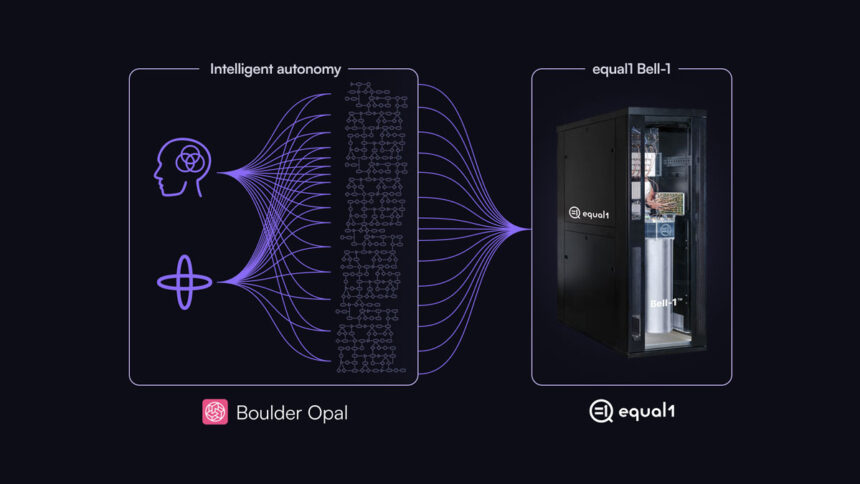
Equal1 has developed the Bell-1 UnityQ quantum computer, which is designed to operate in standard data center environments. By embedding Q-CTRL’s autonomous calibration and control software into this architecture, Equal1 intends to ensure that its systems can maintain performance and stability without requiring constant expert oversight.

Q-CTRL, which specializes in quantum infrastructure software, provides technology that automates calibration, tuning, and performance management of quantum hardware. Its software is designed to improve reliability and reduce the need for manual intervention, enabling quantum systems to operate securely and consistently.
As enterprise interest in quantum computing accelerates, improvements in system performance and automation are needed to ensure delivery keeps pace with demand. A primary barrier to broad adoption is the complexity of “booting up” and maintaining quantum hardware, a process typically handled manually by teams of PhD-level experts. When considering quantum computers sitting alongside GPUs and CPUs at scale, this prospect poses an exceptionally difficult challenge.
By integrating Q-CTRL’s Boulder Opal Scale Up software into Equal1’s deployable quantum computers, the systems are designed to operate autonomously. This integration allows the machines to maintain performance levels without requiring continuous manual oversight, supporting the goal of making quantum computing more practical for enterprise environments.

The partnership emphasises Q-CTRL’s concept of quantum containerization, in which infrastructure software can enable the full virtualization of quantum computers, making it possible to deliver a “plug-and-play” experience for high-performance computing (HPC) and data center customers. End-users adopting Equal1’s CMOS-compatible silicon spin qubit architecture can now experience:
- Autonomous operation: Full automation of the tuneup and calibration of all hardware devices and quantum logic operations, without the need for expert attention.
- Run-time performance management: Real-time monitoring and maintenance, correcting the system to maintain peak performance during long workloads; self-correcting routines ensure uptime even when individual elements temporarily go out of spec.
- Secure local deployments: Embedded, local deployment allowing the full intelligent autonomy package to run without internet access for secure environments.
- Pathway to algorithmic enhancement: Native compatibility with Q-CTRL’s error-reducing software, Fire Opal, will enable users to run performance-optimized workloads with no configuration.
The announcement also included statements from both companies. Jason Lynch, CEO of Equal1, said: “We are excited to partner with Q-CTRL to bring fully autonomous quantum computers to enterprise data centers. This collaboration allows us to combine our silicon-based quantum hardware with Q-CTRL’s world-leading infrastructure software to deliver systems that are practical, scalable, and ready for deployment.”
Michael Biercuk, CEO and Founder of Q-CTRL, added: “Our mission has always been to make quantum technology useful. By embedding our autonomous calibration software into Equal1’s quantum computers, we are enabling systems that can operate securely and at peak performance without requiring constant expert intervention. This partnership represents a major step forward in bringing quantum computing into the enterprise.”
The collaboration between Equal1 and Q-CTRL reflects a broader industry trend toward making quantum computing systems more practical and deployable outside of research laboratories. By combining silicon-based quantum hardware with autonomous calibration software, the companies aim to deliver systems that can be integrated into enterprise data centers with minimal disruption. The stated goal is to accelerate the commercialization of quantum computing by focusing on automation, reliability, and compatibility with existing IT infrastructure.