


IBM has announced plans to invest more than $10 billion in quantum computing over the next five years.
The investment will span research and development, capital expenditure, manufacturing scaling, ecosystem partnerships, and M&A.
Together, these areas are designed to accelerate IBM’s quantum roadmap beyond delivering the world’s first large-scale, fault-tolerant quantum computer in 2029, and advance quantum leadership anchored in the United States.

It builds on the broadest quantum foundation in the industry, including the largest fleet of quantum computers across the globe, the most widely used quantum software, and a client and partner network of more than 340 organizations running real workloads today.
This investment funds the next stage of that foundation, carrying IBM’s lead from today’s commercial quantum computers towards fault-tolerant scale systems.
“The quantum era is no longer ahead of us, it has started. Our clients, partners and users around the world are tapping into IBM quantum computers to do work that was impossible a few years ago,” said Arvind Krishna, chairman and CEO of IBM.
“The pace of discovery with quantum computers is accelerating rapidly and this investment powers our ability to deliver the next generation of quantum hardware, software, and manufacturing,” said Krishna.
This investment reinforces IBM’s push to bring useful quantum computing to the world and builds on wha it touts as the most advanced quantum program in the industry.
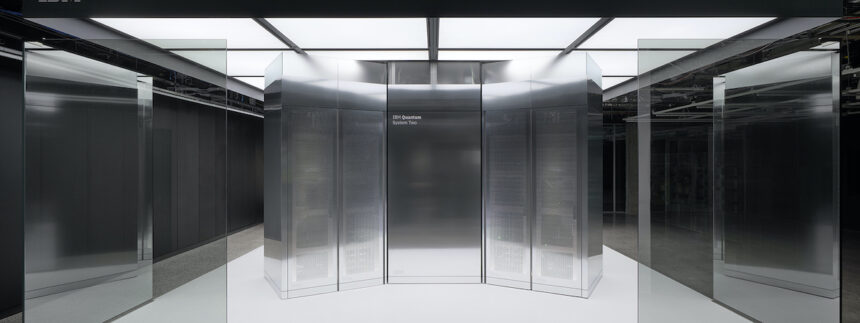
The program covers an expansive global quantum fleet. The company has deployed over 90 quantum systems across the globe via the cloud and dedicated on-site deployments – including more quantum computers than the rest of the industry combined.
This fleet includes quantum computers operating at IBM quantum centers in New York and Germany; at the Cleveland Clinic in Ohio, Rensselaer Polytechnic Institute in New York, PINQ in Quebec, The University of Tokyo and RIKEN in Japan, Yonsei University in South Korea, and BasQ in Spain, with additional systems coming soon in Chicago, and at Amaravati Quantum Valley in India.
IBM has delivered IBM Quantum Starling in 2029, touted as the world’s first large-scale, fault-tolerant quantum computer which will be capable of executing 20,000 times more operations than today’s existing systems.
Starling will lay the foundation for IBM Quantum Blue Jay, which will run one billion quantum operations across 2,000 qubits. These systems will deliver the transformative scale needed for quantum to take on the most challenging and currently intractable problems across science and industries.
Since 2017, IBM’s quantum program has signed more than $1.1 billion in contracts with clients to advance their exploration and use of quantum computing. Today, a network of more than 340 IBM Quantum Network members spanning financial services, healthcare, materials science, academia and government are using IBM quantum computers to pursue real-world algorithmic discovery.
With the support of the United States Department of Commerce, IBM recently announced plans to launch Anderon, which would be the world’s first pure-play quantum wafer foundry.
IBM will contribute $1 billion of cash into Anderon, alongside significant intellectual property, assets, and a skilled workforce.
The tech giant is confident that its partners using IBM quantum computers will demonstrate quantum advantage in 2026.
The company is seeing accelerated progress on this path as evidenced by recent experiments that confirm quantum as a useful scientific tool, including work with the Cleveland Clinic and RIKEN to model a 12,635-atom protein; a collaboration with national laboratories and universities to accurately simulate magnetic materials; and research with universities to prove the nature of a never-before-seen molecules.