



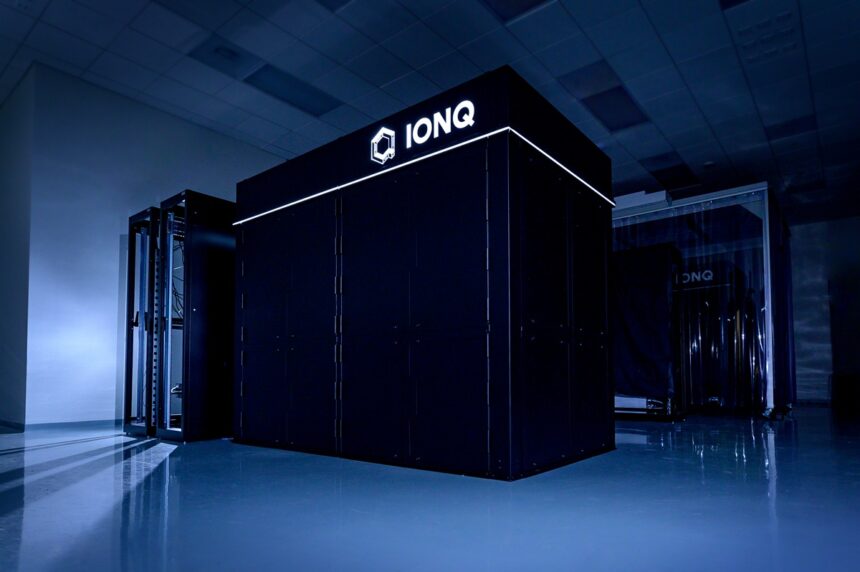
IonQ has demonstrated 99.99% two-qubit gate performance, setting a new quantum computing world record.
The performance of quantum computers today is limited by the error rate of its two-qubit gates, called “two-qubit gate fidelity.” This single number largely defines quantum computing performance – measuring the accuracy of quantum operations. As fidelity improves, fewer errors must be addressed and more complex algorithms can be run.
In a landmark technical result, IonQ has achieved the world’s highest two-qubit gate performance, with fidelity exceeding 99.99% – the first and only quantum computing company to cross the ‘four-nines’ benchmark.
The demonstration used IonQ’s proprietary Electronic Qubit Control technology (EQC) and surpassed the previous world record of 99.97% set in 2024 by Oxford Ionics, now part of IonQ.
This new world record represents a critical technical milestone that advances IonQ’s quantum technology roadmap. By engineering qubits with record-level fidelity, IonQ has now achieved the hardware performance required for it to scale to millions of qubits by 2030.
IonQ’s ultra-high qubit performance accelerates the company’s path to large-scale fault-tolerant systems and unlocks advantages such as error-corrected performance improves dramatically; addressing complex, break-through use cases and; faster delivery of products.
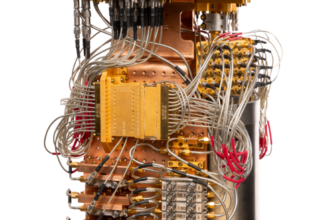
IonQ’s qubit performance result was achieved using prototypes in its R&D labs, which will form the basis for its 256-qubit systems that will be demonstrated in 2026. These devices rely on the company’s EQC technology, which uses precision electronics instead of lasers to control its qubits.
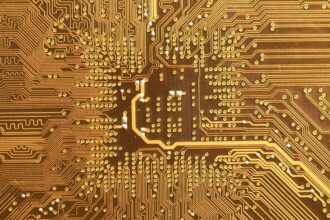
By integrating all qubit-control components onto classical semiconductor chips, IonQ can manufacture its quantum computers via existing semiconductor fabrication – yielding systems that are easier to scale, more stable to operate, and significantly more cost-effective to build.
Reaching four-nines fidelity is a watershed moment for IonQ’s quantum leadership.
Niccolo de Masi, chairman and CEO of IonQ
“This level of quantum performance has been the industry’s north star for decades and crossing it brings fault-tolerant quantum systems years closer to mass market adoption,” said de Masi.” For our global customers, it means unlocking more value from quantum computing sooner, while dramatically lowering the cost and complexity of large-scale systems.”
Chris Ballance, co-founder of Oxford Ionics, an IonQ company, said that in exceeding the 99.99% threshold on chips built in standard semiconductor fabs, “we are now on a clear path to millions of qubits whilst unlocking powerful new commercial applications sooner.”
IonQ claims to be already delivering quantum advantage for industries in areas such as drug discovery, with a 20x speed-up in quantum-accelerated drug development announced in June this year and an up to 12 percent performance improvement compared to classical computing in computer aided engineering unveiled in March.
IonQ has also announced the development of quantum applications in areas such as object detection for autonomous vehicles and artificial intelligence.