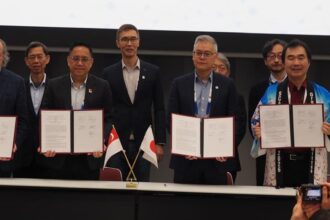



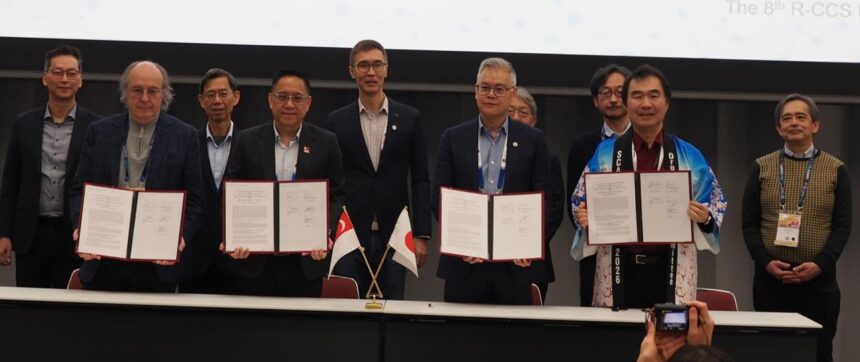
The RIKEN Center for Computational Science (R-CCS) and Singapore’s National Quantum Computing Hub (NQCH), a national quantum programme jointly led by the A*STAR Institute of High Performance Computing (A*STAR IHPC), the National Supercomputing Centre (NSCC) Singapore, and the Centre for Quantum Technologies (CQT), signed a Memorandum of Understanding (MoU) to collaborate on hybrid quantum-HPC platforms and capabilities.
The collaboration brings together RIKEN’s world-class HPC capabilities, with Singapore’s proficiencies in hybrid quantum-classical computing, middleware development and quantum applications. It establishes a framework for international collaboration to integrate quantum and classical supercomputing, supporting the development of hybrid platforms for complex computational challenges.
Hybrid approaches that integrate quantum and classical supercomputing are gaining traction globally to harness the potential of quantum for fields such as chemistry, materials science, optimisation and fluid dynamics.
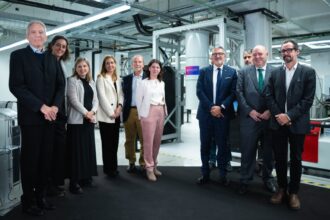
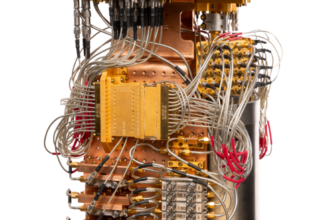
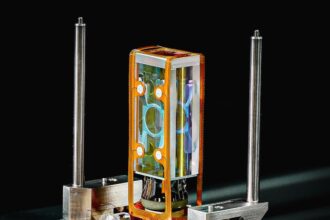
R-CCS is building a quantum-HPC hybrid platform that integrates the supercomputer Fugaku with two commercial quantum computers supported by Japan’s New Energy and Industrial Technology Development Organization (NEDO)1. NSCC Singapore complements and supports integration with quantum systems as part of NQCH’s hybrid computing efforts by providing access to national supercomputing infrastructure.
Under the three-year MoU, the partners will collaborate in two main areas:
· Quantum-HPC hybrid platform development: Joint development and evaluation of middleware and system software for hybrid quantum-classical platforms, including workflow management tools. Both sides will provide access to their respective quantum-HPC resources for testing and benchmarking.
· Applications research: Collaborative research on quantum-HPC applications in areas including, and not restricted to, quantum chemistry, linear systems, fluid dynamics, logistics and optimisation, and decarbonisation.
“This partnership with R-CCS strengthens Singapore’s progress in hybrid computing research and development,” said Dr Su Yi, Lead Principal Investigator at NQCH. “By leveraging NQCH’s combined expertise in talent, HPC infrastructure, middleware development and quantum applications, alongside R-CCS’s world-class HPC infrastructure, we can advance potential applications in areas such as computational biology, finance and logistics.”
NQCH is Singapore’s national initiative to develop applications and middleware for quantum computing, and drives the Hybrid Quantum-Classical Computing (HQCC 1.0) programme launched in 2025 to advance research in hybrid computing middleware, algorithms and software tools. The MoU follows the Memorandum of Cooperation on Quantum Science, Technology, and Innovation signed by Singapore and Japan in January 2026 – Singapore’s first quantum-specific agreement at the government-to-government level.
The MoU was signed at the opening ceremony of the 8th R-CCS International Symposium, held in conjunction with SupercomputingAsia and the International Conference on High Performance Computing in the Asia-Pacific Region 2026 (SCA/HPCAsia 2026) in Osaka, Japan.
1) NEDO (New Energy and Industrial Technology Development Organization) is an organization under the jurisdiction of Japan’s Ministry of Economy, Trade and Industry (METI)’s “Development of Integrated Utilization Technology for Quantum and Supercomputers” as part of the “Project for Research and Development of Enhanced Infrastructures for Post 5G Information and Communications Systems.”