


Quantinuum and BMW Group have formally expanded their ongoing collaboration into a multi-year partnership with a mission to unlock future mobility by applying quantum computing toward advanced materials science.
Since 2021, Quantinuum and BMW Group have been collaborating on joint research focused on tackling complex challenges in industrial chemistry to support the advancement of next-generation mobility. The collaboration has progressed from foundational algorithm development to advanced simulations of molecular systems, allowing the researchers to unlock insights into catalytic activity, reaction pathways, and material performance in energy-relevant environments.

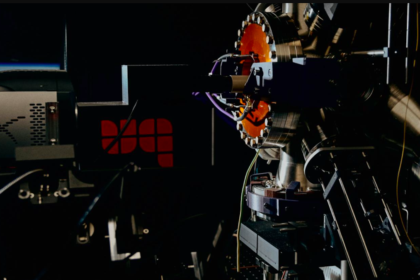
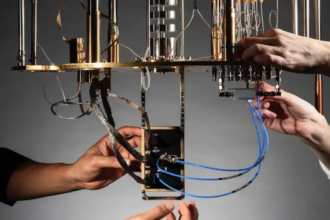
Researchers at BMW Group are utilizing Quantinuum’s trapped-ion architecture, particularly on electrochemical processes relevant to sustainable mobility and the design and optimization of fuel cells.
The companies have now agreed to extend the work. Under the terms of the agreement, BMW Group will utilize successive generations of Quantinuum’s quantum computers. This includes the current Helios system and upcoming generations, Sol (planned for 2027) and Apollo (planned for 2029). This will enable the teams to validate progress at each stage while scaling toward industrially meaningful solutions.
“Quantinuum is focused on driving commercial adoption of quantum computing through close collaboration with industry leaders on high-impact applications,” said Dr. Rajeeb Hazra, President and CEO of Quantinuum. “Our expanded partnership with the BMW Group underscores this focus, and we’re excited to scale the meaningful work we’ve been advancing together.”
“We have been exploring quantum computing for many years,” said Dr. Martin Tietze, Vice President of New Technologies at BMW Group. “Together with partners such as Quantinuum, we translate advances in quantum hardware into real‑world applications, including materials optimization, supporting the development of future vehicle generations.”
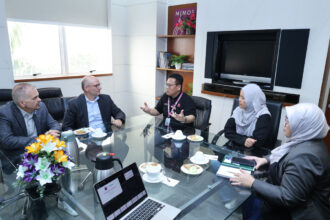
Beyond its technical achievements, the collaboration has evolved into a deeply connected, cross-disciplinary effort, bringing together quantum scientists, chemists, and engineers in a sustained partnership that reflects both the complexity of the challenge and the scale of the ambition.