



Rigetti Computing has signed a memorandum of understanding (MOU) with the Centre for Development of Advanced Computing (C-DAC), India’s R&D organization under the Ministry of Electronics and Information Technology.
Through this MOU, Rigetti and C-DAC will explore the co-development of hybrid quantum computing systems to support government laboratories and academics pursuing quantum computing R&D.
“By joining C-DAC’s renowned leadership in high-performance computing (HPC) solutions with Rigetti’s expertise in superconducting quantum computing systems, we have the opportunity to design and deliver powerful and practical hybrid computing systems,” says Subodh Kulkarni, CEO of Rigetti.
Shri. E. Magesh, director general, C-DAC, said the partnership with Rigetti is a strategic step toward developing indigenous cryogenic electronics, superconducting quantum hardware, and securing access to advanced processor fabrication.
“C-DAC is implementing several nationally significant projects in quantum technologies, reinforcing its role in advancing India’s strategic capabilities in emerging technologies,” said S D Sudarsan, executive director, C-DAC Bangalore. “This collaboration will drive innovation in electronics and information technology—particularly in quantum and hybrid computing — contributing meaningfully to the nation’s technological progress.”
With this MOU, Rigetti and C-DAC intend to collaborate on the design and development of hybrid quantum computing systems and related technologies and bring them to market.
Rigetti and C-DAC expect to also explore use case and application workflow development leveraging hybrid computing infrastructure and participate in workforce development activities.
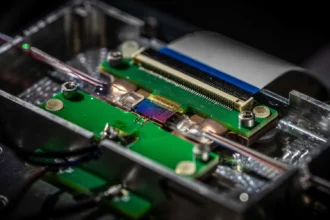
Rigetti’s quantum computing processors, which are powered by superconducting qubits, are ideal for hybrid systems given their fast gate speeds and scalability.
Superconducting qubits are more than 1,000 times faster than other qubit modalities, such as ion traps and pure atoms.
In July 2025, Rigetti announced that it demonstrated the industry’s largest multi-chip quantum computer, Cepheus-1-36Q. Rigetti has already shown scalability of that system to a 100+ qubit chiplet-based system and is advancing towards broader adoption as its flagship platform by end of 2025.
The quantum computing market is largely funded by government quantum computing initiatives. In 2024, governments worldwide announced a total of $1.8 billion in quantum computing investments, accounting for 66% of total investments. Early 2025 investments were already exceeding $10 billion.