




Silicon Quantum Computing (SQC) and Schneider Electric, in partnership with UNSW Sydney, have progressed to Stage 2 of the Australian Government’s Critical Technologies Challenge Program (CTCP), receiving A$3.6 million (US$2.5m) in funding to continue their work in using hybrid quantum-classical computing for energy forecasting.
Energy grids are under increasing pressure and urgent solutions are required. As rooftop solar, home batteries and electric vehicles become widespread, household energy systems have become more dynamic and difficult to predict. Therefore, companies like Schneider Electric use advanced forecasting and optimisation technologies to help balance distributed energy resources, including forecasting when to switch back and forth to solar energy deployment.

For companies like Schneider Electric, more accurate forecasting can improve the management of distributed energy resources, increase renewable energy utilisation and contribute to lower energy costs for consumers. Even modest improvements in forecasting accuracy can deliver these benefits.
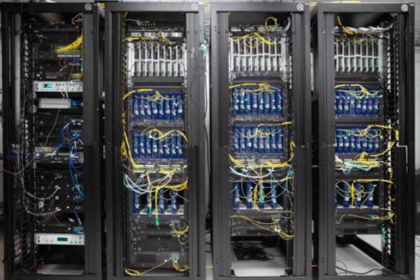
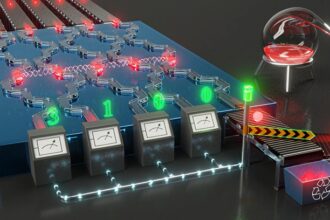
During Stage 1, the joint team explored whether SQC’s quantum-enhanced AI chip, Watermelon, could improve the accuracy of Schneider Electric’s forecasting models. According to the announcement, Stage 1 results delivered well beyond that threshold. By applying Watermelon to next-day forecasting data over a 12-month period, SQC and Schneider Electric claim to have achieved an average 20% improvement in forecasting accuracy against the classical benchmark, with gains up to 41%.
Building on these results, Stage 2 funding will expand modelling to hundreds of homes across Australia, with direct integration into Schneider Electric’s AI workflows, demonstrating how today’s quantum computing systems can be used in production environments.
Michelle Simmons, Founder and CEO of Silicon Quantum Computing, said: “We have always believed that quantum processors would work alongside CPUs and GPUs to deliver real-world performance gains. The results we have achieved with Schneider Electric demonstrate how quantum-enhanced AI can address practical challenges across the energy sector and time-series datasets more broadly. We’re grateful to the Australian Government for continuing to back this important work.”
Colette Munro, Pacific Zone President at Schneider Electric, added: “The energy system is becoming more dynamic with variables like rooftop solar, EVs, and home batteries creating new levels of complexity. Together with SQC, we’ve demonstrated how advanced energy technology has the potential to better manage this complexity, lowering costs for consumers and using energy more efficiently across the system.”