




The Department of Commerce has announced the signing of 9 letters of intent to provide $2.013 billion in federal incentives under the CHIPS and Science Act.
These funds will support a portfolio of quantum companies, including two domestic quantum foundry companies and 7 quantum computing companies to accelerate solving the most critical technology challenges in the race to develop utility scale, fault-tolerant quantum computers. The Department of Commerce’s quantum incentives are designed to strengthen America’s position in this critical frontier technology.

“With today’s CHIPS Research and Development investments in quantum computing, the Trump administration is leading the world into a new era of American innovation,” said Secretary of Commerce Howard Lutnick. “These strategic quantum technology investments will build on our domestic industry, creating thousands of high-paying American jobs while advancing American quantum capabilities.”
The Department will receive a minority, non-controlling equity stake in each company as a condition for receiving the funds to enhance the return for the U.S. taxpayer.
The CHIPS Research and Development Office continues to solicit proposals from eligible applicants for research, prototyping and commercial solutions that advance microelectronics technology in the U.S.

Foundry incentives to accelerate domestic quantum manufacturing infrastructure
The Department of Commerce is proposing to provide incentives for two quantum foundries (GlobalFoundries and IBM) to help establish and accelerate foundational domestic manufacturing capacity for the quantum sector.
- GlobalFoundries will receive $375 million in planned funding to establish a secure, domestic quantum foundry for leading architectures and multiple modalities (superconducting, trapped ion, photonic, topological, and silicon spin) used in large-scale quantum computers.
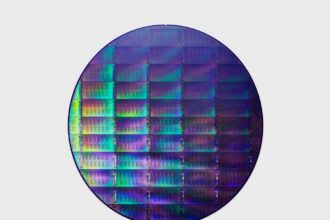
- IBM will receive $1 billion in planned funding to establish a new quantum foundry subsidiary for quantum-grade superconducting wafers by building on its U.S. leadership in superconducting quantum wafer fabrication technology.
Quantum portfolio spans multiple modalities and addresses discrete technology challenges
The structure of the Department of Commerce’s proposed incentives is intended to provide capital toward an initial portfolio of 7 companies that will address the most consequential, unresolved engineering problems in multiple quantum modalities.
“The CHIPS R&D Office is taking a portfolio approach to strengthen and accelerate U.S. leadership across multiple quantum modalities at once, while focusing each award on discrete technological problems of genuine consequence,” said Bill Frauenhofer, Executive Director of Semiconductor Investment and Innovation. “We will be providing incentives to build domestic quantum capacity, solve the hardest engineering challenges, enable multi-year acceleration of technology roadmaps, and drive continued U.S. quantum leadership.”
The companies listed below receiving CHIPS incentives will address multiple modalities including neutral atom, silicon-spin, superconducting, photonic, and trapped ion and accelerate R&D for the most consequential unresolved engineering problems including device reproducibility, optical complexity, error rates, cryogenic systems integration, control hardware, ultra-fast readout electronics, photonic loss, and interconnects.
Atom Computing
Atom Computing will receive $100 million in planned funding to address key technical and manufacturing challenges for neutral-atom quantum computing, including hardware development and systems integration needed to manipulate, control, and address tens of thousands of qubits, and validate their performance.
“This investment will allow us to move faster than ever and strengthens the United States’ leadership in quantum computing,” said Ben Bloom, Founder and CEO of Atom Computing. “With this support, we will be accelerating key engineering advances needed to deliver full-scale quantum systems powered by our neutral-atom technology.”
With the Commerce Department’s support, Atom Computing will accelerate its technology roadmap through targeted engineering initiatives, including:
- In-house development of critical components to drive performance and integration
- Parallelized testbeds to rapidly validate and scale innovations
- Enhanced collaborations with supply chain partners to support manufacturability and growth
The federal government’s intended support stands alongside continued backing from Atom Computing’s early-stage and institutional investors, who have long supported the company’s focus on scalability and engineering rigor.
“DCVC has been invested in Atom Computing from the start, and we are excited to see this bold and timely bet that accelerates the company’s roadmap to a neutral atom based, fault tolerant quantum computer,” said Dr. Prineha Narang, a DCVC Operating Partner.
Robert Schwartz, Managing Partner at Third Point Ventures, added, “This milestone is a powerful validation of Atom’s commercial maturity and technical leadership. We are thrilled to see the U.S. government recognize what we’ve known since our initial investment: Atom Computing is perfectly positioned to lead the development of scaled, performant, practical quantum computers and this technology will ultimately be as important as artificial intelligence.”
Diraq
Diraq will receive up to $38 million in planned funding to develop and scale quantum logic units and accelerate critical manufacturing and integration capabilities for silicon spin quantum computing technologies, including novel designs for large-scale and reliable qubit arrays.
“The U.S. Government has played an important role for over 25 years in funding silicon quantum research through entities such as the U.S. Army Research Office and more recently DARPA. The foundational advancements that came from this work underpin Diraq’s technology today,” said Andrew Dzurak, Diraq Founder and CEO. “Silicon-based processors are the most economical and scalable approach to utility-scale quantum computing. By scaling our CMOS qubit technology in the United States, we are defining the industrial standard for the next era of supercomputing and cementing the nation’s role as a global architect of fault-tolerant quantum systems.”
This investment will accelerate Diraq’s roadmap to enable an end-to-end quantum supply chain – including cryostats, chips, and packaging – with fully American production.
“This LOI is a powerful signal that the U.S. government recognizes silicon-based quantum processors as a viable architecture to securing domestic computing leadership,” said Dr. William Jeffrey, Chairman of the Board for Diraq and former Director of the National Institute of Standards and Technology (NIST). “Quantum technology is a matter of national competitiveness. Diraq’s approach, built on decades of foundational research, is uniquely positioned to deliver scalable, fault-tolerant quantum systems.”
“As quantum computing enters its industrial phase, the challenge shifts from scientific discovery to engineering and scale, making reliable access to advanced semiconductor infrastructure essential,” said Gregg Bartlett, Chief Technology Officer at GlobalFoundries. “We’re proud to partner with Diraq to advance silicon-based quantum processors, leveraging our cryo-CMOS quantum capabilities and broad technology portfolio under one roof to enable quantum systems at scale within a trusted domestic ecosystem.”
D-Wave
D-Wave will receive $100 million in planned funding for critical advancements in annealing and gate-model superconducting quantum computing systems, including qubit counts, error rates, and coherence through advanced dielectric material optimization, interface control, and high-density advanced packaging.
This funding would accelerate development and scaling of D-Wave’s annealing and gate-model quantum systems, including at its forthcoming research and development (R&D) facility in Boca Raton, Florida as well as its R&D centers in New Haven, Connecticut and Burnaby, BC, Canada. The funded initiatives would help D-Wave expedite the delivery of advanced superconducting quantum computers, including a 100,000-qubit annealing system and a 10,000-qubit gate-model system.
“We believe that the U.S. government’s strategic investment in D-Wave would advance the country’s global leadership position in quantum computing,” said Dr. Alan Baratz, CEO of D-Wave. “The award would accelerate D-Wave’s ability to scale quantum innovation domestically, expedite key fabrication processes, and deliver real-world quantum applications to our global customers today. We see this as a transformative moment for not just D-Wave, but also for quantum computing and the United States.”
Infleqtion
Infleqtion will receive $100 million in planned funding to develop the underlying engineering systems and integration requirements for large-scale neutral-atom-based quantum computers and architectures, including high-powered optical systems, novel readout and error correction systems.
“Quantum computing is emerging as a foundational technology for economic competitiveness, technological leadership, and national security,” said Matt Kinsella, Chief Executive Officer of Infleqtion. “This investment reflects the transformative potential of quantum innovation, and we’re honored to work with the Department of Commerce to accelerate U.S. leadership in quantum computing.”
“NVIDIA and Infleqtion have long worked together to accelerate the capability of quantum computing through integration of quantum processors with GPU supercomputing,” said Timothy Costa, Vice President and General Manager for Quantum at NVIDIA. “This announcement is an important milestone for developing large-scale quantum computing systems in the United States, and we’re excited to continue supporting Infleqtion on this journey.”
The LOI proposes support for work focused on advancing neutral-atom quantum systems in the United States, including quantum hardware, photonics and quantum system development. The program is expected to support the continued expansion of quantum engineering, workforce, hardware, software and infrastructure capabilities across Infleqtion’s U.S. operations, strengthening domestic quantum computing capabilities critical to economic competitiveness and national security.
The LOI contemplates a portion of the award being funded up front and the remainder funded on a milestone-based award structure tied to eligible project costs and technical progress. The LOI also contemplates taxpayer upside through the issuance of Infleqtion common stock to the Department on the award date with a value of $100 million at a 15% discount to market based on the closing price on the execution date of the LOI or the definitive agreement, whichever is lower. The securities are expected to be held on a passive basis. Final terms remain subject to definitive award documents and required approvals. The proposed funding is contingent on completion of diligence and definitive award documents and internal approvals of the U.S. Government.
PsiQuantum
PsiQuantum will receive $100 million in planned funding to address key photonic quantum computing technical challenges for matured and high-performance electro-optic materials, high-temperature single-photon detectors, and ultra-low-loss photonic packaging.
With these potential incentives, combined with co-investment by the company, PsiQuantum will accelerate the domestic manufacturability and performance of critical components for utility-scale quantum computing and the American semiconductor industry, including Barium Titanate (BTO) for higher-performance optical switches, high-temperature single-photon detectors, and advanced packaging approaches.
“Strong technology supply chains are essential for American security and prosperity,” said Victor Peng, Interim Chief Executive Officer of PsiQuantum. “PsiQuantum’s world-leading capability in photonics will help write the next chapter in the history of computing. Thanks to bold action from Washington, our company will continue to invest in manufacturing these cutting-edge components right here in the United States.”
“The semiconductor industry helped make PsiQuantum’s path to fault-tolerant quantum computing possible, and now PsiQuantum’s scalable breakthroughs in silicon photonics will in turn create new possibilities for the future of computing,” said Dr. Pete Shadbolt, Co-Founder and Chief Scientific Officer of PsiQuantum. “Our new engagement with the Commerce Department builds on years of collaboration across the U.S. government, and Washington is playing an historically consequential role in helping deliver this emerging technology.”
New potential incentives from the U.S. government would augment PsiQuantum’s major existing investments in America’s quantum and semiconductor supply chains. PsiQuantum’s supply chain is anchored in the United States, and in 2025 the company invested approximately $200 million with hundreds of American suppliers and vendors across 38 states.
Quantinuum
Quantinuum will receive $100 million in planned funding to address critical technology and manufacturing bottlenecks for scaling of fault-tolerant trapped-ion-based quantum computers, such as low-loss integrated photonics, and reliable optical components at trapped-ion critical wavelengths.
“Quantum computing has the potential to unlock new possibilities across science, industry, and national priorities for decades to come,” said Dr. Rajeeb Hazra, President and CEO of Quantinuum. “This collaboration with the Department of Commerce is designed to help Quantinuum’s path to large-scale, fault-tolerant trapped-ion systems while strengthening the U.S. innovation and manufacturing ecosystem.”
The letter of intent supports Quantinuum’s plan to partner with the CHIPS R&D Office and onshore suppliers GlobalFoundries, for critical semiconductor components, and Monarch Quantum, for integrated photonics, to further optimize key engineering pathways for components within Quantinuum’s future commercial roadmap.
“GlobalFoundries is excited to partner with Quantinuum on their ion-trap quantum technology,” said Tim Breen, CEO of GlobalFoundries. “We believe GF’s differentiated semiconductor platforms in cryo-CMOS, cryo-3D interconnect, and advanced packaging, combined with Quantinuum’s deep ion-trap expertise, will help Quantinuum accelerate their quantum system scale-up roadmap to utility-scale quantum computing.”
“Monarch Quantum is proud to partner with Quantinuum to advance U.S. leadership in next-generation computing infrastructure,” said Dr. Timothy Day, Chairman & CEO of Monarch Quantum. “By delivering advanced integrated photonics through a resilient domestic supply chain, we are committed to supporting the secure, scalable manufacturing required for fault-tolerant quantum systems.”
In addition to strengthening domestic semiconductor manufacturing and supply chain resilience, this initiative is expected to support development of a specialized workforce for next-generation quantum computing technologies.
Rigetti
Rigetti will receive up to $100 million in planned funding over three years to address key technical challenges to develop and scale next generation superconducting quantum computing technologies and architectures, such as miniaturizing and integrating novel readout electronics and next generation cryostat architectures.
Under the LOI, Rigetti would pursue R&D projects that address major technical challenges in scaling and advancing superconducting quantum computing.
“Quantum computing will have far reaching impacts on our nation’s national security, economic interests, and overall prosperity,” said Dr. Subodh Kulkarni, Rigetti’s CEO. “We are honored that the U.S. government is seeking to partner with Rigetti to accelerate the pace of quantum computing commercialization and to bolster U.S. leadership in this revolutionary field. This investment will allow us to tackle key scaling bottlenecks more rapidly and get us closer to utility-scale quantum computing.”